


262. Design Your Decade
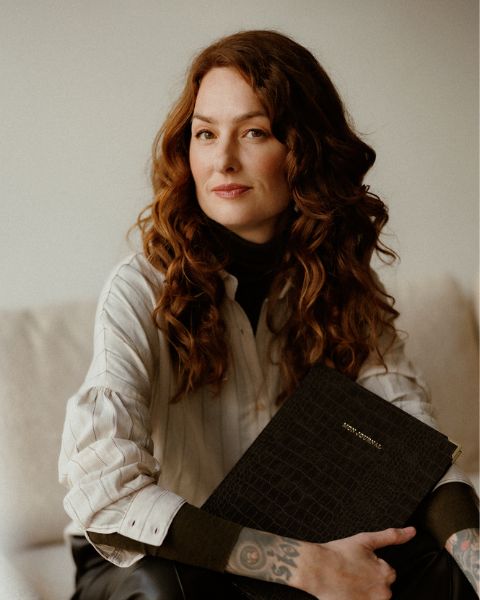
What happens when your vision for the future feels confusing or unreasonable, or like it’s been borrowed from someone else’s life? These are the kinds of questions that came up when I delivered Design Your Decade, a three-day intensive where we zoom all the way out to a 10-year vision and then bring things back sharply into focus.
In this episode, I’m sharing a selection of questions from the bonus Q&A recording that was created after the experience. We cover everything from how to interpret a visualisation that didn’t match what you expected, to navigating the difference between fear and intuition, to staying connected to your vision when your energy inevitably shifts throughout your cycle. This is the kind of coaching that helps you tell the truth to yourself without collapsing or outsourcing your authority.
You’ll learn how to work with desire when it’s been overridden for years, why your brain asks questions that seem useful but are really asking for guarantees, and what it means to create a vision built around all versions of you, not just the confident, energetic one. Whether you took part in Design Your Decade or you’re curious about how I coach, this episode gives you a real feel for the work.
If what you’ve been hearing on the podcast resonates with you, I encourage you to join us in Powerful, our membership, by clicking here!
What You’ll Learn from this Episode:
- How to interpret a vision that feels confusing or unrelated to what you expected.
-
Why your desire muscle atrophies when you’ve spent years orienting around others’ needs.
-
How to tell the difference between fear that’s worth navigating and intuition telling you to stop.
-
Why excitement isn’t the most reliable feeling to build your vision around.
-
How to create a vision that accounts for all versions of you, including the challenging ones.
-
What to do when your brain asks, “How do I know this will make me happy?”
-
Why the journey and who you become along the way matter, even if the destination changes.
Listen to the Full Episode:
Featured on the Show:
- If this episode has resonated with you, I’d love it if you could subscribe, rate and review the podcast. Your review will help other people find the show and benefit from what I share.
- My new book Powerful: Be the Expert in Your Own Life is out now.
- Click HERE to access the Period Power card deck.
- Order my second book Perimenopause Power: Navigating your hormones on the journey to menopause now!
- Order my first book Period Power: Harness Your Hormones and Get Your Cycle Working For You
- Scroll down on this page to sign up for my newsletter!
- Join us in the Powerful membership.
- Get access to Design Your Decade
Episodes Related to Design Your Decade
Full Episode Transcript:
Hi folks. This is episode 262, and I’ve got a great episode lined up for you because I have just finished delivering Design Your Decade. It was a three-day intensive where we zoom all the way out to a 10-year vision and then bring things back sharply into focus.
So on day one, you created a 10-year vision for your life. I took you through a guided visualisation and offered some teaching on that. On day two, we translated that 10-year vision into a three-year picture, and a lot of that session was where I taught all about your self-concept and what you see as possible for someone like you and focusing on who you need to become as well as what you need to do. And then on day three, we brought that into a clear one-year plan.
And it just exceeded my expectations. The way you all showed up for it was incredible. I was so impressed with how receptive you all were and how willing you were to receive what I taught and offered coaching on.
And I asked those of you who took part in the experience to submit questions about the sessions and the exercises so that I could curate them into a bonus Q&A recording. And it’s about an hour and a half long in total, but I decided it would be really great to share some of the questions and my answers here on the podcast because they’re just so good.
And I have also decided to keep Design Your Decade up as something for you all to buy and take part in. So, you know, if you’re thinking, oh, I wish I’d taken part live, you can still get to do it. So Design Your Decade is available now. The link is in the show notes. It’s £97, or it’s a bonus if you join the membership, and it includes all three session recordings, including the guided visualisations, the full Q&A bonus audio, which you’re going to get to hear a snippet of today, and the workbook, which honestly is a work of art. It is a work of art. I put so much work into that workbook, and I actually bumped into someone locally who took part, one of my clients, and she told me that she’d worked through the whole thing and how much the questions have shifted her thinking and her being already.
So this is a process that I’ve been using for years. This will be the sixth year that I’ve done this for myself. I’ve taught shorter versions of it inside the membership before, but I really wanted the process to have its time on stage that it deserves. So you can buy Design Your Decade on its own or you can get it included as a bonus when you join the membership. The links are all in the show notes.
All right, let’s get into a few of the questions. Enjoy this Q&A.
If you want to do things differently but need some help making it happen, then tune in for your weekly dose of coaching from me, Maisie Hill, Master Life Coach and author of Period Power. Welcome to The Maisie Hill Experience.
So this question is, what can you do if your vision is confusing? “What I saw was not related to what I thought it would be. I was hoping to see something more to do with my career. And instead, I saw myself in a tent on the side of a mountain at sunset.”
Well, first of all, this could be an actual literal representation of your future. This could be something that a part of you actually wants to achieve. But if you don’t think it’s a literal representation, then what does it represent? Really just inquire, what could this represent for me? I’ll give you an example.
So if this were me, being alone in a tent on the side of a mountain would represent being a leader. Because leaders, by their nature, are out in front. We are alone in that position. That’s some of the challenge and some of the joy of being a leader. And that’s true even when we have people supporting us and people who are somewhat alongside us, but still, there’s one leader.
So we are out in front. So perhaps being alone in a tent is something to do with that. That’s what it would be for me at least. Leaders tend to love the journey of getting there, of the climb, of the effort that’s involved. So the mountain could represent that. We also love that we get to appreciate the view from where we are. That’s my experience of being a leader.
And then beyond that, we of course see a continued vision when we climb one mountain, we don’t stop being leaders. We start to see what else is in front of us. And there’s a very real horizon there because when you reach one summit, you realise what your capacity is and how much is actually possible. And then your brain starts to fire off in other types of visions and plans.
So your understanding of what came up could be very different to mine, but that should give you an idea of how you can explore this. And then of course you can combine it with the more cognitive process that is outlined in the workbook that you got as the bonus part of this experience. So use the vibe that’s come through from the visualisation. Think about what it could represent, but then also pair that with your answers to the questions in the workbook.
So the next question is, “I’ve spent a lot of time thinking about what others want. It’s hard for me to truly understand what it is I want. However, my vision was clear in 10 years, and it felt good to visualise it. It also felt unreasonable and impossible to get there, which I believe was the right thing.” Yes, I agree. That’s great. “However, I question myself and my vision after, wondering if that vision is truly what I want and it’s not just a reality I’ve seen elsewhere, like friends, family, TV, Instagram. How do I know if that is what truly will make me happy one day? How can I trust myself better when it’s been a while since I really asked for what I wanted for my life?”
This is an interesting one. So first of all, I would pay attention to where that experience of desire is coming from in your body and what it feels like. Like, what’s the quality of it? Is it coming from inside of you somewhere, or does it feel like it’s something that you’re chasing? But I have a hunch that what you’re really afraid of isn’t wanting the wrong thing. It’s wanting something enough that you’d have to act. But let’s work our way through this.
So again, this is a really common thing for people who’ve spent years orienting themselves around other people’s needs and expectations. And when you’ve been trained to look outward, your desire muscle atrophies. And it doesn’t mean that you don’t have desire. It just means that it’s been overridden for so long that it doesn’t feel like a clear signal at first when it’s coming from inside of you. So part of this is just practice because remember that desire is a skill too. I have a whole podcast episode about this. It’s episode 90, and it’s called Practising Wanting.
Now, your brain is doing something sneaky here. It is asking questions that appear useful. And it’s not that they aren’t useful, but I think what it’s doing is trying to discredit your vision by asking for a guarantee of some kind. So how do I know this will make me happy? How do I know it’s really mine and that I’m not copying? Because if you can’t know for sure, then you don’t have to commit or do anything. And if you don’t commit and take action, you don’t have to risk things like disappointment or potential judgment or being seen as someone who’s ambitious and has desires.
So here’s what I want you to consider. Your desire is allowed to be influenced by others because, of course, you’ve seen versions of your vision elsewhere. That doesn’t mean that you’re copying or that it’s fake and that it’s not a true desire for you, because noticing what you love in other people’s lives can be a really great way to begin.
So perhaps instead of asking, is it mine, you could ask what about this is mine? What is it that I love? And then you can look at that vision you have and look at what the emotional tone is it. As I said, check in with what it feels like in your body. You could think about what values are present. You could think about what you’d get to experience in that version of your life and why that matters and why that is in line with your values. You could think about who you’re being in that version and what’s different about how you treat yourself and what standards are normal for you.
So all of those questions are going to help you get down to what the essence of your vision was, and that essence is like your own internal compass, rather than other people’s desires being your compass or not even a compass, like just a direction that you’re going in. But the details of it might evolve and shift, but that essence is your compass. And none of us know what will truly make us happy. And again, I’m not sure that’s a useful way of approaching things.
This is why I teach that when you’ve created your future vision, like when you’ve actually taken it from something you’ve imagined in your mind and you’ve made it your reality, your life is still going to be 50/50. There will be things that are great, and there will be things that aren’t great. There will just be different things than what you’re currently dealing with. So you will be living your vision, which will be great, amazing, but you’ll be dealing with a different set of circumstances, and that’s not going to mean that your life feels perfect and amazing all the time and that you’ll be truly happy with zero issues to contend with. That version of life does not exist. It is a lie.
This is why it’s so important to know how to manage your mind and feel your feelings, because no matter your life circumstances, your brain is still going to come with you, and your feelings will as well. So you need those skills, which is why I’m so big on teaching them. But it’s really important to have desires and to act on them because the only way you’re really going to know how you feel about them is by experiencing them.
And some people experience them, and then they’re like, actually, this isn’t what I thought it would be. This isn’t what I want for my life, and they change. But then at least they know. And you might think, well, what’s the point in doing that? Why go to all that effort? Why do all of this? And it’s because of who you become.
So think about if you set out on a journey and you get to that end destination and you realise, yeah, this isn’t the place where I want to be. Who you became on that journey means that you are more set up for success with the next journey that you take. You’ve become a different person, you’ve built skills, you’ve gained experience along the way. And that means that what you do next is going to be so much simpler and come so much quicker to you than if you didn’t have that range of experience.
So there’s lots to value about the journey and who you become along the way. But sometimes I think the angle of questioning, well, is this what I really wanted, can be an avoidance technique, and that may not be true for you, but I just wanted to offer that as a general consideration for everyone who has taken part.
“How do you tell the difference between fear telling you not to do something which it would be good to ignore in order to grow and expand, and your intuition telling you not to do something which is probably a good thing to listen to? And how to differentiate between common sense and fear-based thinking?” This is such a great question.
So you want to discover the thoughts that are behind those feelings. That will tell you a lot and be very revealing. But this can also come down to how it feels within you. And this is why it’s so great when you are experienced with spending time with your feelings and spending time with a range of your feelings and paying attention to their energetic signatures within your body. Now, some people have more availability of that than others. Not everyone is able to be in touch or aware of the sensations in their body. So take that into consideration.
But when you spend time with the sensations of your feelings, you can start to differentiate between fear about doing something that would actually really serve you, which could show up as like trepidation, concern, and although those feelings, they could be really significant. I could be feeling a lot inside, there’s a focus on things that are external. So, how people might respond, what are they going to think? What are they going to say and do when I fail or when I succeed? There’s all sorts of things there.
But for me, when it’s intuition telling me not to do something, it’s more internal, and there’s a sense of coherence and settled authority. So the energetic signatures for me are that it’s grounded and centring, but it’s also forward-facing. Whereas the other types of fears about the ones that we’d be good to learn to navigate in order for growth and expanding into the next version of you, they have what I would describe as a more chaotic energetic signature for me that brings me into different places in my body, and my thoughts also were with it. So it’s my intuition feels very different to fears about doing something.
Now, that’s just my experience, something to offer you, but you could just start to spend time with what is the difference for you when you feel like your intuition is speaking to you, versus how it feels when it’s just fears coming into play and limiting thoughts as well.
“I’m in the confident, motivated, extra energetic part of my cycle right now, which makes all the fun planning even more fun and awesome. I’m already partly dreading what will happen when that inevitably shifts and things feel harder or less exciting. My autumn phase usually comes with bouts of defeatism and ‘why bother anyway’ vibes. How can I best prepare to manage that shift and stay connected to all the motivation I feel now? There must be a way to work with the very moody versions of myself, too.
Yeah, this happens to me too. Thank God for self-coaching because if I couldn’t coach myself through those moments, I dread to think how different my life would be. I certainly wouldn’t have created Design Your Decade or the membership. But I actually love to answer that question of why bother anyway. And it may sound like an odd question to ask, but even if it never happens, why is it still worth it? Why is it still worth doing? And remember, the vision that you have for your life isn’t built around the socially acceptable version of you that exists around ovulation. It shouldn’t be.
It needs to be built around all the versions of you, including the premenstrual one. So part of my plan is to have an incredibly sensory-friendly home because I live with two males who make a lot of noise. And that’s challenging for me at the best of times, even around ovulation when oestrogen’s really helping me out, never mind when my period is due and it’s a really dialled up experience. So my vision accounts for that. So my recommendation here is to think about who you are throughout your cycle, who you will be throughout your lifetime and create a vision that is built around that.
But this is also why I’m less interested in you all creating visions for your life that excite you. I think things feeling exciting can be a bit of a trap because although it wants to get our juices going in some way, I think it’s more important to think about something that feels coherent and true to you and that matters to you, that why is there, but it needs to be something that is going to get you through the times when it is challenging, whether that’s related to your cycle or whether there’s obstacles and challenges along the way, because it’s not always going to feel exciting.
So the way I coach people is not based around the premise that it’s going to feel exciting. But the great thing about when you can coach yourself is that you can create feelings on purpose, and the feelings that do help you when you are struggling or when you are like, well, this is it, I’m going for it, then how do you need to feel?
So, for example, for me, excitement doesn’t get me doing things. Like, I just don’t rely on feeling excited. And it’s not because what I do or what I’m making isn’t exciting in some form, but what really will get me sat at my laptop creating the things that matter for all of you, the things like how I want to contribute and show up in my lifetime, is connection.
So I really think thoughts that make me feel connected, connected to you, the people who are listening to this, the people who’ve yet to discover my work and that I’m yet to help. I just think about them. I think about there’s people out there who don’t know that what they’re thinking is just a thought and that there’s other things they could be thinking instead, that they don’t know that their feelings aren’t necessarily facts, but they are important to experience. That makes me sit down at my laptop, but it’s connection to my purpose, connection to those people that either I know already, existing clients, or people that I haven’t even encountered yet and have no idea about any of those things. That’s what gets me to show up.
All right, folks, that’s a wrap on today’s questions. I hope listening to this gives you a real feel for what we got up to in Design Your Decade, but also how we do things inside the membership and how I coach, how I think, where I challenge, and how I help you to tell the truth to yourself without collapsing or outsourcing your authority.
So if Design Your Decade speaks to you, you can buy it on its own. And if you want ongoing support and coaching as you apply things, it’s all included inside the Powerful membership. All right, I’ll catch you next week.
Hey, if you love listening to this podcast, then come and check out my membership, Powerful, where you get my best resources and all the coaching you need to transform your inner and outer life. Sign up to the wait list at maisiehill.com/powerful and I’ll see you in the community.
Enjoy the Show?
Don’t miss an episode, follow the podcast on Spotify or Apple Podcasts.
Leave a Review on Apple Podcasts
