


305. Perfect Timing and Taking the Lead with Powerful Member Katie [30 Day Goal Challenge]
What happens when you decide that now is the perfect time to go after something you really want? It’s easy to put off your goals, wait for the right circumstances, or let other people’s priorities influence your decisions. But sometimes, a shift in how you think about what’s possible can change the way you approach your goals and what happens next.
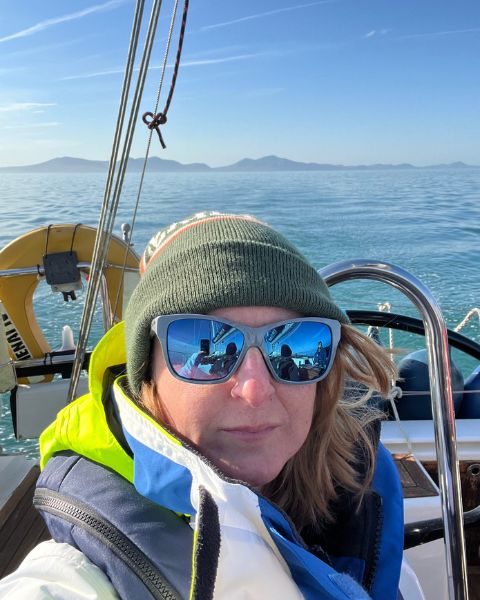
In this episode, I’m joined by Powerful member Katie to talk about her experience of our 30 Day Goal Challenge and how it helped her pursue a sailing qualification she’d wanted for years. We explore the thoughts that helped her take action, how she worked through avoidance and self-doubt, and what she discovered about making intentional decisions and prioritising what matters to her.
Listen in to hear how Katie’s experience has influenced other areas of her life, including her approach to leadership, her career, and moving house. You’ll discover how being intentional about your goals can help you approach challenges differently, recognise new possibilities, and take the lead in creating the experiences you want.
If what you’ve been hearing on the podcast resonates with you, I encourage you to join us in Powerful, our membership, by clicking here!
What You’ll Learn from this Episode:
- Why deciding that the timing is right can change how you approach a goal.
- How Katie used the 30 Day Goal Challenge to make progress towards her sailing qualification.
- What helped Katie overcome avoidance and take action on something she’d been putting off.
- How to identify the thoughts that genuinely motivate you towards your goals.
- Why connecting with what you want matters when making decisions for yourself.
- How Katie’s experience of achieving her goal influenced her approach to leadership.
- Why being intentional about how you approach a challenge matters just as much as the outcome.
Listen to the Full Episode:
Featured on the Show:
- If this episode has resonated with you, I’d love it if you could subscribe, rate and review the podcast. Your review will help other people find the show and benefit from what I share.
- My new book Powerful: Be the Expert in Your Own Life is out now.
- Click HERE to access the Period Power card deck.
- Order my second book Perimenopause Power: Navigating your hormones on the journey to menopause now!
- Order my first book Period Power: Harness Your Hormones and Get Your Cycle Working For You
- Scroll down on this page to sign up for my newsletter!
- Join us in the Powerful membership, or join the waitlist.
- Connect with Katie Shipley
Episodes Related to 30 Day Goal Challenge:
- 257. Long-Term Goals and Imperfection with Heather (A Powerful Member’s Journey)
- 278. The Power of a 30-Day Goal
- 279. Why You Delay Your Goals and How to Start Anyway
Full Episode Transcript:
If you want to do things differently but need some help making it happen, then tune in for your weekly dose of coaching from me, Maisie Hill, Master Life Coach and author of Period Power. Welcome to The Maisie Hill Experience.
Maisie: If you want to do things differently but need some help making it happen, then tune in for your weekly dose of coaching from me, Maisie Hill, master life coach and author of Period Power. Welcome to the Maisie Hill Experience.
Okay, folks, welcome to this week’s podcast. I am so excited for today because I have one of my clients here, Katie, who has been a member inside Powerful for quite a while now. I’m sure she’s going to tell you all about her journey. But I’ve invited Katie on the podcast specifically because back in May and June, we had a 30 Day Goal Challenge inside Powerful.
And it’s the first time we’ve ever done it in 30 days because usually our process is at the start of every season, you get invited to set a goal for that season, an intention, a focus, something that you want to achieve for that season. And then we spend that season coaching on all the things making it happen. And I just thought, you know what? I want to up the ante. Let’s see what happens when we shorten the timeline to 30 days. And it was incredible. Like, for me, personally and professionally, I absolutely loved it. And it was just really fun getting to be a coach through that process.
But I want to hear about what it was like for some of my clients whilst they were in the Challenge and then what has transpired since because we’re several months on from now. And I think that’s really interesting to look back at what was achieved, but to also reflect on what has happened since. Katie, welcome to the podcast.
Katie: Hi Maisie, thanks for having me.
Maisie: It’s great to have you here. So why don’t you go ahead and just introduce yourself, share your pronouns, maybe where you are or what you do, whatever you want to share.
Katie: Okay, I’m Katie. I’m she/her. And I live in Staffordshire currently, in the middle of a house move. And I am a volunteering advisor at a search and rescue charity.
Maisie: Wow. So cool. It’s just always so fascinating to me because, of course, we’ve got so many people in the membership who have all sorts of backgrounds, live in various places around the world. And it’s always so cool to hear what you’re all up to. So when did you join the membership? Do you remember?
Katie: It must have been June 2025?
Maisie: Okay. So you’d already gone through the goal-setting process a bit.
Katie: Yeah. Yeah, I’d had a go at doing some goals. I’d done quite a lot of internal goals.
Maisie: Okay. What kind of internal ones were they?
Katie: Things like I had this idea, my first goal was going to be about figuring out what I actually wanted, what I liked, making those decisions for myself and being more attuned into myself rather than agreeing to things that I thought other people might want me to agree to. So it really, that laid the foundation for me because then that was sort of a platform that I can then use to build on with my other goals. That’s on, it’s always ongoing work. You say that quite a lot in the coaching that sort of stuff is really ongoing, but it was good for me to have a really intense first goal focused on me, which was for me quite groundbreaking. So I really enjoyed that.
Maisie: So you were used to doing the seasonal ones. And then when I announced the 30 Day Goal Challenge, what was your first reaction to it?
Katie: This is absolutely perfect timing.
Maisie: Oh, that’s such a great thought.
Katie: You introduced it partway through a goal for me. And that goal was one where I’d been inspired by the design your decade to, I think you’d tried to encourage the membership to find an external goal to do rather than internal. And I had a long-term goal for life that I’d wanted to do since I was 16, which was a sailing qualification. And I was partway through that as a goal, and I was putting off part of it. There was a bit that I was really avoiding. I was circling around it, and the 30-day goal was the perfect opportunity for me to just tear the plaster off and do the thing that I was avoiding.
Maisie: Yes.
Katie: It was perfect timing.
Maisie: Yeah, it was just a very interesting Challenge in terms of people’s reactions to it because of course, that’s just the facts of the situation. And then however you think about it is going to create how you feel and how you approach it, how you engage with it. So your thought, this is perfect timing, was like spot on. If anyone wants to steal that thought for anything, whether it’s a goal you’re working on or just something you got to get done today as you’re listening to the podcast, to just think, this is perfect timing.
Katie: Yeah, and interestingly for me, towards the end of the 30 Day Challenge, that thought became a thought that got me through other parts of the Challenge, the wider goal, and was a platformed part of my celebration thoughts as well about how I’d done that this is something I’ve wanted to do since I was 16 and it turns out this is the perfect time for me to do it. So it was really a really key thought that ran through the Challenge for me.
Maisie: How incredible to have something in you from 16 and then to do it. What do you think prevented you from doing it sooner?
Katie: So I’ve been thinking, and on the reflection, I thought about this, that there’s a couple of things that have come up in the coaching that I’ve realized those sort of spark moments where you go, oh, that’s why. I think one of them was around that sort of Prince Charming concept that I’d somehow been waiting for someone else to make this opportunity happen for me, that there would be this magical moment where all of a sudden I’d be able to slot this qualification in with something else I was doing, perhaps through work or meeting people and that I knew socially. And that hadn’t happened for over 20 years, unsurprisingly.
And then the other thing that was the real turnaround moment for me was that to do this course, it’s a time commitment. I’d actually a couple of years ago done the theory part of it, but to take five days off work and also to take my annual leave for myself rather than to spend with other people, that was the bit that clicked when I suddenly realised it’s my annual leave. I can take that to do what I want to do. And yes, it may be one week where I’m taking annual leave for myself, and I won’t be spending time with family and loved ones, but it’s just one week. The click moment for me, when I realised that, I think I was out on a lunchtime walk, and I was just like, oh, I could just- I’m just going to book it.
Maisie: Oh, that’s so good. It’s so interesting, just the layers of reflection, isn’t it? Of, like, looking like, yes, this is perfect timing to do it now, but like, why hasn’t it been perfect timing before? What’s gone on? And of course, there’s so many reasons why things like this get delayed. But particularly if you, as you said, have been out of touch with what you actually want or if you’ve been socialised to be caring for other people instead of what you want. Can you say something about that?
Katie: Yeah, so I think that there was something there around I knew that this was something that I wanted to do. I’d been talking about it for a long time, and actually the people around me were supportive of me doing it, perhaps a little bit for their own gain because if I get this qualification, we can go on sailing holidays together and I’ll be the responsible person.
But I deep down knew that I wanted to do it for myself. And I think that work that I’d done in my first sort of six months of being in the membership on figuring out what I really wanted and being much more, I’ve heard you talk and use the word selfish in a positive way, that it’s okay to want things for yourself. And I think I’ve never really approached life in that way. I’ve always been someone who wants the best for other people, wants to support other people.
I think I’ve, I don’t want to say I’ve neglected myself, but I just haven’t focused in on myself and tuned in on what I want. And so all of that groundwork built up to this and gave me that confidence to say, right, I’m just going to book it. And then I booked the course, and I knew I had this deadline coming up then. As soon as I realised it, I was committed and that was it. It was happening.
Maisie: It’s so interesting to hear you say that because sometimes when we get into what is it that you want, and even as you said, when there’s people around you who are supportive of you doing that, but still there can be internal resistance to you actually giving yourself permission to go after what you want. So you can be in touch with what you want, you can have supportive people encouraging you and still get in your own way of doing it. So I’m really glad you drew attention to that. But also what you said about how it’s not that you were neglecting yourself, but at the same time you weren’t really tending to yourself in the way it could be.
And I just got this mental imagery of a houseplant that, you know, is being watered and it’s alive and it, like it’s green and it’s doing well, but what would happen if we added some fertiliser to the soil or repotted it or slightly changed the position? And I think that’s just such good imagery to think about the difference.
Katie: Yeah, I agree with that. And I think that there’s something about the work I’ve been doing that’s introduced more intention into my life. So where in the past, I’ve always described myself as someone who’s just sort of riding the waves, and I’m just seeing what happens. And if someone suggests something, I’m just saying, yeah, okay, let’s try that, or I’ve not had that sort of pinpoint in the future, going, that’s what I’m working towards. And I’ve done quite well with that approach to life. It’s gone quite well for me. But now adding that element of intention has made me think, oh, actually, if I really put my mind to something, maybe I could achieve something here. What could I achieve? There’s this thing I’ve wanted to do for a really long time, so let’s try that. And yeah, no spoilers, but…
Maisie: Yeah. So fun. Okay, well, let’s get into it. So you had the seasonal goal and then the 30 Day Challenge was a part of that goal. So what was your goal in the 30 Day Challenge?
Katie: It was to set myself up for success for my practical day skipper assessment.
Maisie: Okay. And I think the timing of it really was perfect timing because your assessment was booked for after the Challenge finished, quite soon.
Katie: It was. There was a couple of days after the Challenge finished, so. Oh my gosh. Yeah, it’s perfect.
Maisie: And then for those of you who aren’t in the membership or haven’t heard me speak about this before, the process that we do is you set a goal, and then you come up with your three rocks. And your three rocks are the three essential things that you need to do in order to achieve that goal, or at least your best hypothesis of how you’re going to achieve that goal. And it’s not a to-do list, though sometimes it can read like one, but it’s more about how can you make this goal inevitable? What are the must-have steps? So, Katie, what were your rocks that you came up with?
Katie: I had to revise every day. So there was a workbook from the theory assessment I’d done a couple of years before. There was just about the right number of topics to mean that a daily read of that book would just get me in the mindset for the course. I had morning thoughts, which was to do with building my confidence, which that one’s a really good one that I got coached on that in the end with you. So there was some really good things that came out of that.
And the last one was daily movement. So that was partly because I didn’t want it all to be about being in the book. Daily movements part of my plan care label, so I need to get out in the fresh air for my well-being. Also, I was going to be spending five days on a boat, which was going to be really physical, so I didn’t want to go onto the boat and get a bad back or a bad leg or something from doing something physical, having sat still for months doing revision. So yeah, important one, I think there.
Maisie: Yeah. And that’s the thing because obviously with that rock, that was directly related to you spending time on the boat and for you taking care of yourself. But sometimes when I’m working on a really substantial goal, I do have something in that maybe doesn’t seem directly related to the goal, but that gives me strength inside my body or awareness of my physical boundaries, like kettlebell work, for example, or walking or anything like that, because these things, of course, do have such an impact on our ability to achieve a goal, but also sustain the accomplishment of that goal and not just like collapse at the end of it.
Katie: Yeah. Yeah, I think there’s something as well about physical activity frees up your mind so you can have that sort of exploratory thinking time, maybe if you’re walking or doing the kettlebell work, that there’s no pressure about what you’re producing with your mind at that time, is there? So you can just.
Maisie: Yes. Yeah, I agree.
Katie: That’s where all the creativity comes from.
Maisie: Yes, totally. You’re actually taking me back to the pandemic and the lockdowns and when I would be coaching my one-on-one clients, I would do them as walk-and-talks. So I’d go out on my phone with my headphones and I would just be walking around and my clients were doing the same, and it was just incredible to see that relationship between physical movement and ability to get unstuck mindset-wise and shift basically.
Okay, so you came up with your goal, came up with your rocks. When you were thinking about actually doing it, what did you think you would find difficult?
Katie: So I knew that I was going to find the chart work difficult. Or what I should say is, I thought I knew that I would find the chart work difficult because I was avoiding it. And the reason for that was I’d been told by a few people that after you’ve done the theory, you should do the practical within 12 months because you’ll have all that knowledge still up there.
And through some coaching with you on one of our group coaching calls, I realised that I thought I’d already failed this assessment because I hadn’t, I wasn’t doing my practical within 12 months of having done my theory. I was two and a half years further down the line. So I had this blocker that I’d already failed.
So that for me to look at the chart work, I should explain, people probably know what I mean by chart work, but it’s the paper charts, plotting routes, using compasses, all that, and it’s all the maths and things like that. So I was afraid of it. And I can remember being on the coaching call with you and the book was behind me on the bookshelf behind me now, and I hadn’t even got it off the bookshelf. It was up there.
Maisie: I remember this.
Katie: Taunting me. As soon as we got off that call, you were like, we’ve got five minutes left; just go and get the book. No, I got it. And I started.
Maisie: That’s the thing, because sometimes when I’m coaching you all on calls and it’s something that you’ve been procrastinating about essentially, sometimes I’m like, well, sod listening to the rest of the call, go do the thing, like take the momentum of the coaching and start.
Katie: Yeah, so I did.
Maisie: And what happened?
Katie: What I ended up doing is I ended up reaching out to my theory tutor and asking them if I could have a catch-up chat with them to just run over it. And that gave me accountability to then actually look at the charts prior to speaking to them. And as soon as I looked at the charts, I knew exactly what I was doing. It’s all logical. It’s not a hidden science. It’s all really logical stuff. And I understood it, and I hadn’t forgotten how to do it. And I went to that meeting with my tutor feeling actually fairly confident that I knew what to do. So we really, we just had a cup of tea in a chat, which was more of a sort of confidence boost for me than anything.
Maisie: Yes. So I love that. One, that you asked for help. That’s a skill in and of itself. I know plenty of people listening struggle with that. So I just want to emphasize that point that you asked for help. You set yourself up for success by one, the idea was that you were going to be receiving help, turns out you didn’t need it. Fantastic. But also that accountability. And then this is such a great example of how you can have a thought that feels utterly true to the point of being factual. But then you go to do it and realize, oh no, that was a load of nonsense. I do know this. So what was that like for you having that realisation?
Katie: It was just a relief, I think. It was that, oh yeah, I do know. Why did I doubt myself? And I think, you know, on reflection, one of the things you talk about is this might be difficult, but I can figure things out. And that’s the takeaway from it really is I won’t always retain all that information. And perhaps I’ll be out chartering a yacht somewhere and I’ll have to remind myself, but I will have the resources that I can go through to remind myself prior. And I’ve got people I can talk to. I think it’s that self-trust, isn’t it? That I trust myself that I can actually do this.
Maisie: Yeah, I think you’ve hit the nail on the head there because the thing is there’s always going to be situations, challenging situations that even with the best preparation are new to us. And when you don’t have that self-trust, you’re always in that position of needing to prepare, needing to know everything before you do anything. And of course, so much of the learning is in the doing. And so I love that you’ve highlighted that importance of self-trust because, you know, you could pass all the exams, but if you don’t have that self-trust, then it’s going to be really limiting.
So let’s get into that third rock, the third essential thing you came up with, which was your morning thoughts. So, of course, we do a lot of self-coaching in the membership. A lot of that is looking at the thoughts you have and having powerful thoughts that you can think instead. So I’m very curious to hear about what was going on with your morning thoughts.
Katie: So after the coaching, through the coaching, we talked about those morning thoughts, and you highlighted the I get to way of thinking, which really struck a chord with me because the thing that I haven’t mentioned at all throughout this conversation is I love sailing. I love being out on the boat, wind in my hair, water splashing in my face. You know, all that and the all of that stuff. I love it.
And by doing the I get tos, I got to focus on those things. So it was I get to spend five days on a yacht. I get to go sailing in North Wales. I get to meet other sailors, and I get to learn from other people, and I get to share knowledge with other people. And all those thoughts were just so much more meaningful to me than the original set of thoughts that I came up with.
Maisie: Yeah. I think that’s the thing is sometimes you can come up with, like, the first layer of thoughts that kind of are enough to get you going. But then as things evolve and you settle more into whatever your process is towards the goal, then those sorts often need to evolve. And the thing is, I’m sure you’ve heard me describe it this way before.
When you’re coming up with a powerful thought that you want to lean into because it’s going to help you, it feels positive, it’s going to get you going with things, it’s a bit like going and trying on clothes in a shop. There’s some clothes that you can look at and think, oh God, what an incredible dress. And then you put it on and go, it does not feel right to me. Or actually it doesn’t suit me in the way that I’d like it to.
And so sometimes thoughts like on paper can sound fantastic. I am a day skipper. I do know what I’m doing. And sometimes those will feel really powerful and believable to you. But sometimes thoughts like that can just feel like you’re trying on someone else’s clothes and like you’re trying to make them fit and feel good on you, but they just really don’t. But I love that the way you went with it is that it really was about the meaning.
Katie: Yeah, why I’m doing this.
Maisie: So as you were going through this Challenge, was there a moment where you did something differently to what your past self would have done?
Katie: Yeah, there was. And it was around the logbook. So one thing I’d neglected throughout the whole process was to get a logbook, which you need for the course to say what sailing experience you have. And I had a panic when I opened the logbook, and I felt that I didn’t have enough experience, that hands-on practical experience. And I started talking to my partner about it. And what I would have done differently in the past is I would have let that panic spiral. I’d have probably started to think about how I could get out of doing the course at this point and not doing it.
But instead, one of the things I’ve been working on is my communication, and in particular with my partner. And I spoke to him about it. I said, just out of curiosity, what would you do in this situation? And he said, “You’ve got lots of experience. You should just be really proud of what you’re taking with you to that assessment.”
Maisie: Just what I just like my body just like filled with oxytocin, then just hearing because this is what co-regulation can do, what being vulnerable and sharing with a trusted person and what an incredible thought for him to offer back to you.
Katie: Yeah, it was very straightforward. You clearly have lots of experience. Take that with you to the course and show what you can do. And that is what I did, and I took that forward as a thought as well to the assessment. And when I got there, it turned out that I was one of the most experienced sailors on the course as well. And that felt really nice. So it was a good conversation.
Maisie: That’s great. I love, though, that you did that work prior to rocking up at the assessment and finding that out because that would be the difference between that internal validation and the external validation. So you did that work for yourself first, and then the cherry on top is finding that out when you’re among your peers rather than relying on that evidence to make you feel good.
So what do you think having a 30-day deadline did that a more open-ended one hadn’t, whether it’s like the 90-day seasonal goals or even a more long-term one? I’m curious about the difference for you.
Katie: The 30 Day Challenge really focused my attention on this one element of the bigger Challenge because this was really was about getting that book open, doing the revision, reminding myself about the knowledge that I had. And I love a spreadsheet, so I created a chart where I could tick off all my daily movements; I could tick off all the subjects that I was revising, had my daily thoughts there as well to keep me going and keep me motivated.
And what I also like in the goal setting is you ask us why is this important? That’s one of the questions in the goal setting. And I had that statement in front of me as well. So it wasn’t actually an Excel spreadsheet. Other spreadsheets are available. It was just in a sketchbook next to me, where I sit and have my cup of tea and things like that in the house. I had this sort of visual chart that I was following through. So it really focused me on that and every day checking them off, this is what have I done today on the daily, on the 30 Day Challenge. That really worked for me.
Maisie: Yeah. I’m pretty similar. I had an experience when I did a 30-day yoga challenge and, you know, the yoga studio had this big chart on the corridor. And it was like, it was a huge studio as well with everyone’s names and each day and you got a gold star, you know, that you would put next to your name for each one. And I find that highly motivating.
Katie: Yeah.
Maisie: But yeah.
Katie: I wish I’d had some gold stars now to.
Maisie: Well, there you go. Next time, next time, get yourself some gold stars. I’ll be sure to mention that on the kickoff call next time we do it.
Katie: Yeah.
Maisie: Coming back to why it matters, why is it important? I was actually bringing this up on our coaching call yesterday in the membership because when you write down why it’s important, you are coming up with your connection to your purpose, connection to your desire, connection to the goal. And everything you write down about why it’s important are the thoughts that then you can return to when maybe your period is due, maybe you’re really stressed, maybe your loved ones are vying for your attention and they’ve got needs. And if you’ve got that, especially if you have it written down on paper, even more so if you’ve got it somewhere pretty visible, either in a notebook or on a wall or something, then you are going to always be anchored in why it matters. Really important to have that.
Okay, so speaking of that, was there anything that you had to drop in order to make room for this goal? Were there any challenges in you prioritizing this?
Katie: To be honest, the only things I had to drop were scrolling on social media or watching a bit of TV or I just had to switch out what book I was reading. So it wasn’t, I could fit this in the way I’d set it up with the 30 Day Challenge was I could fit it in around my routine anyway. My word for the year, well, it’s two; it’s a bit of a cheat; it’s intentional stimulation. And it was all about swapping out those behaviours where I was doomscrolling or you call it buffering, where I was doing something like that rather than focusing and doing something more intentional. So it was being more intentional with those downtime moments. And it was very easy to make space for it in the end.
Maisie: Wow. That’s great. That’s another great thought you can all steal. It’s easy to make space. That’s a great one. Okay, so has it, I know it’s time’s gone on a bit, but has it sunk in that you did it? Because, of course, we should say you went on. Oh, spoiler alert.
Katie: I did. So yes, I passed the assessment. So I am a day skipper.
Maisie: Congratulations.
Katie: Which, thank you. It was such an amazing feeling. It did feel a bit like, did that really just happen? The week of the assessment was beautiful sunshine in we circumnavigated Anglesey, but it felt like we were in the Mediterranean. It was during one of the heat waves. We could go and swim in the sea and all that sort of lovely stuff. There was dolphins and it was absolutely incredible, unforgettable experience. I can’t stop smiling talking about it.
And it, what’s interesting for me is that the Day Skipper qualification was always the end goal for me. But during the process of achieving the goal, I started to think, well maybe I could do the next because there’s another qualification you can do after that and after that. And I started to think, oh, actually, maybe this is more of a stepping stone to some other exciting things I can do. And I think the moment that it really sunk in was in August, we chartered- I say we- I chartered a yacht.
Maisie: Yeah, own it.
Katie: On the west coast of Scotland, and we had a week on a yacht in the Jura Sound, and it was incredible.
Maisie: Is this the picture that you shared in the community?
Katie: Yes, it is.
Maisie: Is that the one? Oh my god. First of all, I remember you sharing about the dolphins during your assessment. And I think everyone in the community just got to feel so delighted for you to have be having that experience first of all, but also to pass and to qualify. But then I remember the picture of you when you were charting a boat for the first time. Do you call it a boat, a yacht? What do you call it?
Katie: It is, well, you can call it either, I think.
Maisie: I’m not up on my maritime terminology. It’s just so incredible. So just such huge congratulations. And it gives me goosebumps to imagine you actually doing it for the first time.
Katie: It felt really special. And I’ll be honest, we probably could have done with the relationship coaching prior to going on a yacht together for a week. The word mutiny was used at one point. But one of the first things I said to people when we got back was we’re still together, so it can’t, it must have been okay.
It was just such a special experience and really meaningful to me. It’s something I’ve wanted to do for a really long time and now that is accessible to me all the time because this qualification doesn’t go away. So it’s been an incredible achievement and I really think that for me, joining the membership has supported me to get there and really focus and like I said, be more intentional to do this for myself.
Maisie: Oh, I can just see like the pride on your face. It’s absolutely brilliant. Was there anything that, like, surprised you or a fun moment during the Challenge?
Katie: I think what I said before about that idea that I thought that the Day Skipper was the end goal. I always thought that was it. Already it’s led to another adventure that I’ve had and this idea that I can go and do other qualifications and build on my experience.
Maisie: Is there something basic and maybe seems a bit simple, like looking back on it, that really shifted things for you that you just wish everyone knew about and could use in their lives?
Katie: I think for me it was the I get-tos. I think to shift that way of thinking, that felt really simple, just to reword how I was thinking about things, but it was actually really powerful to make that change, that shift. It changed my motivation and it became inspiring then to do the assessment. I was inspired to do it. Yeah.
Maisie: And then let’s talk about what’s happened since, because I know, of course, now you’re thinking beyond that assessment and into other things, but I know that the theme of leadership has been quite a strong one for you this year. I know like we’ve had some conversations about it in the community. So I’m just curious about how you achieving your goal, working on it for that 30 Day Challenge, how that’s continued into other aspects of your life.
Katie: Yeah. Without really thinking about it, my goals this year have been leadership-focused. And the one that’s the huge surprise to me is when I realised that the Day Skipper one is leadership-focused because it’s about being in control of the crew and the boat.
Earlier in the year, I’d done some work on my leadership, I called them my leadership and influence values. So I’ve taken my personal values and then shifted them into how I focus on leadership and influence. It was really key for me to add the word influence there because I wanted to just make it clear to myself, I suppose, that I can influence leadership without being a leader.
There’s some career stuff linked to this, but essentially I’ve focused on leadership. I’ve been trying to be more outward about that and more vocal about my influence, about leadership. And actually recently I’ve been offered a new role at the same organisation, which is called Leadership Development Lead. So
Maisie: Oh my gosh. How meta and how perfect?
Katie: I know. So I’m so excited about it and it just seems to really bring together all of the work that I’ve been doing this year. So it’s incredible. You know, I don’t think I expected that to be an outcome from this year at all.
Maisie: What a delightful surprise for you to be experiencing. Oh my gosh. Would you like to share what your current goal is? Because I know we’re close to the end of the year. What are you working on this season?
Katie: So this season is to move house. I have focused on being a leader during the house move process. So that’s to support me with the practical things and also when I’m speaking to solicitors, to really put that leadership focus on it. And it had to be the goal for this season because we’d accepted an offer on the house. So it was like, this has to be the goal because this is going to take up so much time.
Maisie: And I’m just going to pause you there and say I’m so glad that you made that decision and that there was that moment of self-leadership in that decision because sometimes, usually for newer members who aren’t like so familiar with my goal philosophy and how we do things in Powerful, but often someone might say, you know, I’m thinking of picking this for my goal, and it’ll be like some kind of big external goal. I am also moving country or moving home or doing some other significant thing.
And my instinctive response most of the time to that is, why are you going to do that to yourself? And it’s not that you can’t do those things, but I think often when we are considering capacity and sustainability of doing these things and like not needing a whole season to recover after achieving something, then it’s about doing what’s already in the calendar, but being intentional in who you’re going to be through that process, how you’re going to be through that process, and really having it as a goal that yes, it’s important, or it needs to happen, it’s already there, but really elevating it into a goal rather than just something that’s happening. Could you share a bit about your experience of doing that?
Katie: It won’t surprise you, I have another paper spreadsheet on the windowsill in the living room now, and it’s a big paper and Post-it notes, and I’m just marking off each task that’s happening that needs to be done, checking it off. What’s really satisfying about that is there’s a lot of Post-it notes now, which means we’ve done quite a lot of the work. My rocks are to lead and influence in line with my values throughout the house move, to find a house. So one of the lines was because so much effort to keep looking and arranging all the viewings and all that stuff.
Maisie: Well, and the thing is the goal wouldn’t happen if you didn’t do that.
Katie: Exactly.
Maisie: It doesn’t, it does need to be on there.
Katie: Yeah, it is essential. We’ve got prepare to move, which is all the decluttering, packing, selling bits of furniture we don’t need and things like that, which is I’m finding very satisfying. And then to do the paperwork, that one’s got a one step at a time next to it because I really don’t want to feel overwhelmed. I know people often say that moving house is really stressful, and I can see exactly why. And I sort of said to myself, well, I don’t need to find it stressful just because it is thought of as stressful. So I could actually really enjoy this project management opportunity.
Maisie: And by judging the look on your face and, like, your body language, it looks like you are.
Katie: I think I am. Yeah. There’s a lot to learn. It’s the first time we’ve sold and bought. So I’m learning loads, which I really enjoy, and I’m getting through the process. And yeah, really slowing it down and being intentional about all the things we’re doing is, yeah, I think I am enjoying it. Yeah.
Maisie: Yeah, well that’s great to hear because, you know, when we talk about moving or for me it was writing a book, like there’s these ways that people talk about it that are just like the collective mindset that we accept as the truth. Like, moving is really stressful. And it’s like, yeah, of course it can be, and undoubtedly it’s an intense experience; lots can happen, there can be lots of ups and downs to it. But how do you want to show up to that situation?
For me with writing a book, like every author I’d spoken to had some form of mental health crisis, breakdown, burnout as part of writing a book. And once I started trying to write, I was like, oh my gosh, I can totally see how things can go off the rails. And yeah, you achieve the goal of writing the draft and meeting the deadline, but at what cost?
So it’s about bringing that in. And I remember with me writing the book, it was the important addition to it was my goal is to write the book with my mental health intact. So I think sometimes it’s about what’s the second half of the sentence that really brings it home in terms of what is the result that you actually want to create?
Katie: I think there’s something around goal work and the way that we approach it in the membership is that it’s that just having a look ahead. I know we do those weekly check-ins. I love the weekly check-in, like what’s going to happen over the next week. And I feel like this is a bigger version of that with the house move, that I’m looking ahead and going, well, where am I going to struggle? How am I feeling about this? Where am I going to need advice and things like that? And I, instead of just going, well, I’ve never done it before, I’m just going to wing it and see what happens, it’s having that foresight and just making a bit of a plan has really helped.
Maisie: Yeah, I think that element of making decisions in advance of things actually happening. So really thinking about, like, well, what’s going on this week? What’s my non-negotiable? Where could I struggle? So considering all of these things is just such good preparation for that week ahead. Amazing. Is there anything else you would like to add or share, Katie?
Katie: The only other thing that this may actually be a better answer for one of the questions you asked me before as well- the sort of simple takeaway. There’s a phrase in sailing that is you get to go around again if you’re not sure. And I love that.
Maisie: I love it. Oh my gosh. Say it one more time so that everyone can hear it.
Katie: Go around again if you’re not sure. Yeah, it’s really, it completely takes the pressure off, doesn’t it? It’s a lovely phrase to remember that we’ve got time. We just get to go around again. Love it.
Maisie: That’s going to be like one of those phrases that I just take on board, and everyone in the membership will be saying it. So I really appreciate you saying that, Katie.
Katie: Yeah. Oh, I’m glad I did.
Maisie: This has been such a great conversation to have. I have really loved hearing more about your reflections on the Challenge and what was coming up. And I just really appreciate your generosity with everything you’ve shared because I know it will benefit everyone who has listened to the podcast. So thank you, Katie, so much.
Katie: Thank you for having me. It’s been, it’s been really fun. Thanks, Maisie.
Maisie: My pleasure. Okay, folks, that is it for this week. Have a cracking week.
Hey, if you love listening to this podcast then come and check out my membership, Powerful, where you get my best resources and all the coaching you need to transform your inner and outer life. Sign up to the waitlist at maisiehill.com/powerful, and I’ll see you in the community.
Enjoy the Show?
Don’t miss an episode, follow the podcast on Spotify or Apple Podcasts.
Leave a Review on Apple Podcasts
