


39. The People of Influence Series: Victoria Albina
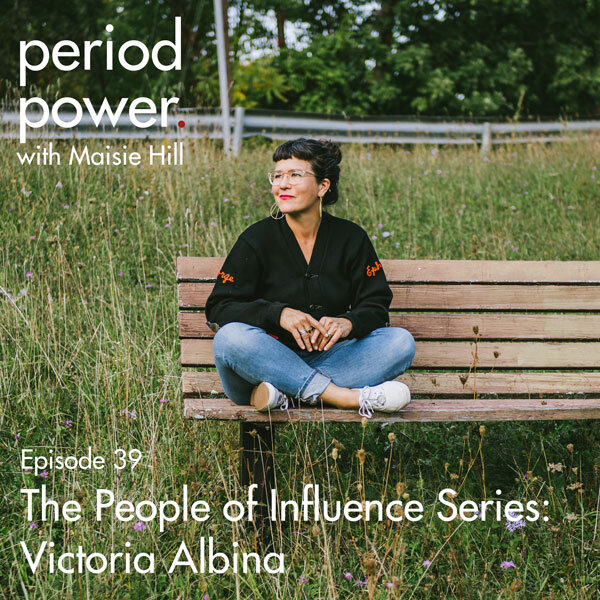
It is said that you are the sum of the six people you spend the most time with. And I have so many incredible people in my life, it got me thinking about a way that I could introduce you to them all. So welcome to the ‘People of Influence Series’, where I’m introducing you to some people I love who I think you need to hear about. And to kick off the series, I’m bringing Victoria Albina onto the show.
Victoria Albina is a holistic nurse practitioner, herbalist, breathwork facilitator and codependency life coach. She is the host of the Feminist Wellness Podcast and has been my life coach for a year and a half. This podcast actually exists thanks to her help, so I knew I had to introduce you to her this week.
Tune in this week for the first instalment of the People of Influence Series as I chat with Victoria about a range of topics including feminism, self-worth, regulation, interdependence and more. Hear some of the many ways Victoria has had an influence on my life and the importance of showing up in authenticity in your life.
If you found this episode helpful and want to go from feeling hijacked by your hormones to living in flow, you will love The Flow Collective. Doors are currently closed, but you can sign up for the waitlist to be notified when they next open. I can’t wait to see you there!
If this episode has resonated with you, I’d love it if you could subscribe, rate and review the podcast. Your review will help other people find the show and benefit from what I share.
What You’ll Learn from this Episode:
-
What codependency is and how it might affect you.
-
How we might use thought work to gaslight ourselves.
-
What polyvagal theory is.
-
How to trust in yourself and your experiences.
-
The importance of developing a loving, compassionate relationship with yourself.
-
Why investing in yourself is one of the most important things you can do.
Listen to the Full Episode:
Featured on the Show:
-
Order my new book Perimenopause Power: Navigating your hormones on the journey to menopause now!
-
Order my first book Period Power: Harness Your Hormones and Get Your Cycle Working For You
-
Wondering how you can submit questions for the next Q&A? Sign up for my email list on the homepage and I’ll send you the form!
-
Victoria Albina: Website | Instagram | Feminist Wellness Podcast | Anchored: Overcoming Codependency Program
-
Want to start a podcast? Check out Digital Freedom Productions!
Full Episode Transcript:
If you are in the horrors with menstrual cycle issues or you want to learn how to harness your hormones then you are in the right place.
Welcome to the Period Power podcast. I’m your host Maisie Hill menstrual health expert, acupuncturist, certified life coach and author of Period Power. I’m on a mission to help you get your cycle working for you so that you can use it to get what you want out of life. Are you ready? Let’s go.
Welcome everyone. This is a slightly different episode than what we’re used to because I was just thinking about how I have so many incredible people in my life. And I just want an opportunity to introduce you to them. So I came up with this idea of you are the sum of the six people you spend the most time with, all that kind of thing.
Victoria: Something like that, yeah.
Maisie: Yeah. And I never think about it in terms of the actual time you spend but the conversations you have in your head as well as the actual time you spend with someone. And I was thinking who are the six people that have the most influence in my life? So this series I think it’s going to be called People of Influence. And my guest today is my first person of influence.
Victoria: Yay.
Maisie: Now, before I get Victoria to introduce herself I do want to say that this is not an open invitation for people to pitch to come on the podcast. It is invitation only. But I do get requests to come on and the podcast is pretty much the Maisie Hill show so I’m happy to keep it that way. And I’m just going to once in a while bring on people who I love who I think you need to hear about on. So that’s what you need to hear. Now, we’re already talking, why don’t you go ahead and introduce yourself and share your pronouns and anything else that’s relevant at this stage.
Victoria: Why, thank you. So my name is Victoria Albina, I use she, her pronouns. I live on occupied Munsee Lenape territory, also known as the Hudson Valley of New York State in the US. And I am also a life coach. I am trained as a holistic nurse practitioner and I’m a breathwork facilitator and host of the Feminist Wellness Podcast.
Maisie: Yeah. You managed to keep that history about yourself quite brief. You missed out herbalist and I’m sure other things as well.
Victoria: So many things. I’m a Leo, I mean we should put that front and centre because Leos, Leos are going to Leo. I mean what are you going to do? There’s nothing to do. Just love us or…
Maisie: Get out of the way.
Victoria: I can’t even finish that sentence, because why not just love us?
Maisie: And if you can’t already tell, this is why I wanted Victoria to come on the podcast because we just have fantastic conversations all the time. And basically most conversations we kind of say to each other, “Wouldn’t it be great if the world heard this conversation?” Because everyone stands to benefit from the chats that we have. So to put this all into context for everyone, Victoria is a colleague of mine but she’s also my life coach. She is my one-on-one coach. And we have been working together for a year and a half. We’ve got a lot of shit done in a year and a half.
Victoria: We really have in what even is linear time, it’s not even a real thing. A year and a half, wow.
Maisie: I know. So why don’t even remember how I heard about you. I just remember seeing that your niche, your speciality was co-dependency. And I was like, holy shit. There is someone who that’s their thing, that’s what they coach on. And I identify as being co-dependent. I was like, “This is the person for me.” And I didn’t even listen to your podcast and sign up for your email. I was just like, “Okay, if that’s what she does.” And I’m digging your vibe through Instagram, I’m going to figure out a way to work with you. So that’s the context of how this all happened.
Victoria: I love that. I’m hearing I followed my intuition and my discernment, and I listened to my body and my inner children, and I went for it.
Maisie: Yeah, which is as we have discovered a year and a half of a really powerful place to be.
Victoria: Oh yeah. Oh yeah.
Maisie: Now what I wanted to talk about first of all was this podcast also exists thanks to your help. So when I’ve been thinking about, well, how have you influenced me, that’s one of the ways, everyone. This podcast is here because I think at some point I just kind of casually mentioned, “Yeah, I’ve been thinking about doing a podcast for a while and I’ve got a mind to do it.” And you were like, “You should meet Pavel and Angela, my podcast team.”
Victoria: They are the best.
Maisie: And you just introduced us by email. And then all of a sudden I was planning a podcast. So there’s that. But you’ve also influenced my second book because I wrote that in challenging times, in the first lockdown in a short period of time with a four year old at home whilst running my business and doing all the things. And I just remember this really crucial conversation towards the end, it was about a month out from the deadline thinking do I need to move into editing now?
And I can’t remember what you said but it was basically, “Yeah, I think now would be a good time to move into editing.” And a day later I was like, “Thank God you told me that.” Because I was definitely getting into perfectionist stuff with it of oh no, I need to do this more and I need to do that more. And it’s like, yeah, what if it’s done? I think that’s what you said, “What if it’s already done and you’ve just got to put it all together.”
Victoria: Right. Yeah, because our brains love to spin out on this story that we could somehow be more perfect. And then our brains believe that will make us more lovable, which will make us more safe, which will calm our nervous system. And somehow magically reparent our inner children but it’s not exactly how that works is it?
Maisie: No, it’s not. And you’ve reminded me, let’s talk about – why don’t you explain for everyone what co-dependency is because I think you’ll do a better job than me, just so that no one’s left in that thought loop of what’s co-dependency, what are they talking about?
Victoria: Right. So I define co-dependent thinking as the chronic habit of sourcing our sense of worth, validation, importance, lovability, goodness in the world from other people, places, and things instead of from its true source which is within ourselves. And so from that habit we spin in people pleasing because we need to keep everyone happy with us, so they’ll validate us and tell us we’re worthy of love because we deeply fear we’re not.
We spin in perfectionism because we have to be the A+ everything, because again if not, how will we know we are worthy of the air we breathe and the water we drink, and the space we try not to take up, if we don’t have other people saying, “Oh my God, you’re so perfect.” So we’re constantly looking outside. And the big problem with that is we become these chameleons. We don’t show up in our authenticity. And that’s the essential human task is to show up in our authenticity with big open hearts.
And to say to the world, “Here I am.” Bumps, and bruises, and warts, and all. And I am choosing to love me because from unconditionally loving me it is possible for me to unconditionally love you. And by choosing to unconditionally love you I can show myself that I too am a being of love.
Maisie: I’m just over here nodding, and grinning, and yes. Yes, yes, yes. Which you’ve also happened upon one of my other things that I noted down in terms of the influence that you have had on me because – well, let’s just be clear, there are many ways. I have just picked a select few knowing that we have an amount of time to talk today, we can’t go through it all. But one of them is that I have through working with you, and the space that you hold for me every week, that I’m really able to be autistic with you.
And when we first spoke, and we were deciding if we were going to be a match if we were going to do this thing. And became pretty clear instantly, yes, let’s do this. But I was at a point where I was thinking I am self-diagnosed as being autistic. And I was in the process of trying to find a way to get a professional diagnosis. But I also wanted to do coaching with you. And basically I didn’t have the money to do both. And I needed to figure out what I wanted to do.
And you, I think just in that first meeting the way you held space for where my brain went and where my nervous system went and all the stuff that came up for me. Just I still see the impact of that even if we had never coached after that, just that one hour. And when your brain freaks out a bit and you kind of collapse a bit and you go silent and you withdraw, and you disconnect, it does feel like a lot of time is going on. So I don’t know how long I was silent for, but you just let me be silent. I want to say it was five minutes.
But I was going to some very interesting place in my brain, and you just let me be silent. And you just let me have a bit of a freak out. And then you checked in with me. And we figured it out. And we’re going to come back to this conversation again in a moment for a different reason. There’s going to be many strands here. But that really set up that foundation where just I knew going forward that any call we do I can just show up as me. Because to go back to your point of just being authentically me and just showing up as me.
And that sometimes I’m not up for eye contact. And I just want to stare out of the window and still talk like this. Or there’s times when I need to do certain things with my body because it feels good, and it helps me to regulate myself. And you really facilitate that. And that sometimes my brain just goes off in firework explosions of different things. And sometimes I won’t finish a train of thought and I’ll just jump onto the next. And you just kind of wait for me to do my thing. And then we find our way back. And I just wanted to really acknowledge that because I think that is so huge.
And I just think if all human beings had that from someone in their life whether it’s a coach that they work with, or a friend, or whoever, just the world would be such a better place. And I’m going to try not to cry now. But, well, I know, we’re all okay with tears. But that has been really powerful to me just to know that, especially there was a time when we were working together I think just maybe a year or a bit more together just as I was getting diagnosed. Where I was losing the ability to speak, I was so dysregulated at certain times, I couldn’t speak.
And knowing that I had a space where I could come to where I didn’t have to speak was just wonderful. So thank you for that. That has been a huge influence on me.
Victoria: Well, I’m so grateful for the opportunity to work with you and to hold space for you. One of the greatest wounds from my childhood that I carried for so long was not feeling seen for myself, for being me. I’m Argentine, we are a loud people and yet I was born to two very quiet people who would much rather sit and drink a cup of tea, and read, and talk to no one. And I think it was challenging for them to figure out how to parent me. And it was challenging for me to be their child because I’m a Leo. I’ll say it 17 more times.
I’m gregarious, and boisterous, and loud, and ridiculous in the best sense of that word.
Maisie: Yeah. That’s a great way, you are ridiculous in the best way.
Victoria: Ridiculous, I’m ridiculous. I’m just this huggy love monster. And it was very challenging to learn how to be okay with being me in a setting where it was not possible for me to fit in. And so I needed to learn how to support myself, love myself, regulate myself, and come back to my authenticity because I have spent so long trying to pretend that I could be quiet.
Maisie: Sorry.
Victoria: No, I mean, seriously.
Maisie: The idea, yeah.
Victoria: Yeah. No. And so for me one of the greatest gifts of both the work I’ve done for myself and of being coached is learning what it truly means to hold space. What it means to truly be judgement free, in full acceptance of what is. And that’s a core challenge within co-dependent thinking. Because we don’t have a connection with that internal locus of control, we feel constantly out of control often for very, very, very good reasons, from our childhood, our family blueprint, our socialisation, our conditioning.
We’re always seeking that sense of control which means being the loudest voice or the quietest, interjecting or withholding. There is all sorts of patterns and ways this shows up, the A+ student or the rebel. And what’s not present in there is our authenticity because we’re trying to manage everyone else and their emotions, their thoughts, their actions, thinking that it will create different results for us. And so for me tapping into that, what I believe is a deeply innate capacity within all of us to hold quiet, judgement free space has allowed me to do that for myself as I do it for others.
And honestly, and this word is always a compliment, honouring your weirdness, come on, what’s better than being weird? Every single week opens up space within me to honour my own more and more because we’re mirrors for each other. That’s what good coaching is, is seeing where we’re mirrors.
Maisie: Yeah. And I do feel, that’s my experience of being coached by you is that mirror. I mean I think we do have different backgrounds but there are some similarities there in terms of working as practitioners, moving over to life coaching, being massive geeks essentially.
Victoria: Total geeks, yeah.
Maisie: Being really hot women, just rocking it in life.
Victoria: Yeah. No, totally. Fashionable.
Maisie: Great lipstick choice for you. I always appreciate your lipstick.
Victoria: Why, thank you. I’m a fan of the hot pink and the bright red, it goes with my snow white kind of look. Yeah, great ink, you have more great ink than I do but we have great ink.
Maisie: Yeah. We’re great.
Victoria: We’re great and we’re weird and we didn’t fit in.
Maisie: Yeah. And it’s so interesting when you say we don’t fit in because – well, we actually shifted things because we started coaching over video like this. And then I can’t remember how we happened upon it. But you had suggested to me, “Maybe we could try just doing an audio only call.” And I had done that with some of my clients but for some reason I just hadn’t thought about it for us. Maybe because I just like seeing your lipstick. So when you suggested it and we gave it a go and I was like, “I can actually walk around Margate when you’re coaching me.”
And I realised that my body really likes it when I can be moving whilst we’re doing this. And it’s so funny because for any of you locals who are in Margate, if you ever see me on a Thursday afternoon cracking up laughing on a street with no one else there it’s because I’ve got Victoria in my headphones and we’re just cracking up laughing. Or if I just am standing stationery with my eyes closed on a residential street looking a bit weird probably to everyone else, I’m just checking with my nervous system and we’re doing a fun exercise together.
Victoria: Yeah. So I actually do remember when we shifted. So we were doing a somatic exercise and you started going into dorsal vagus which we can detail that, nervous system polyvagal if you’d like. But I watched your body start to shift into dorsal. You started disassociating, checking out a bit. And I sort of brought you back and I asked, “Is knowing that I’m watching you, is that overwhelming your nervous system?”
Maisie: I can vaguely remember.
Victoria: And I remember your shoulders dropped when I asked that.
Maisie: Yeah. It’s so much better for me doing the audio, much better. And I do it when I’m coaching in The Flow Collective and things. It’s video and things and I’m all good with that. But when it’s this is for me, it’s my coaching, it’s different.
Victoria: It’s different. Yeah, and I think there is no bad nervous system response. It doesn’t exist. Some of them are a lot more challenging than others, let’s be real. But there’s no bad nervous system response. It’s all about learning how to assess where is my nervous system, stepping into compassion and love and then honouring whatever your nervous system needs in that moment. There are times when I’ll get sympathetic activation around a topic.
I remember I was walking in the forest two years ago with my now ex. And they said something that really activated me, and I was like, “Hold my bag, I’ll be right back.” And I just took off sprinting. They were used to this. But I had that activation energy, that movement potential in my body. And the options were say something regrettable from sympathetic or just give my body what it needed which was whoosh, which was fast bunny on the trail, run, run, run, come back. And I ran for two minutes. But it let my body complete that stress activation cycle.
And we can slow this down, and we can define what I’m talking about here. These are some higher level nervous system geek words. But where I’m going is this work to take our lives back from co-dependent perfectionist and people pleasing thinking. The work you do in The Flow Collective to help humans to reconnect with their bodies, with their hormones, with the moon, with their own energy, with their capacity comes back to recognising what our bodies need. Stepping out of that judgement we were socialised to have.
I mean just what we were taught PMS is, you’re being a bitch. Maybe I’m tapping into my deepest inner wisdom but thanks. But really starting to see through those stories so we can show up and honour our needs.
Maisie: Yeah, because I think that’s often there, isn’t it? There’s no questioning there’s a need there but because of how we’re socialised we’re just going to ignore that need and belittle ourselves for having it in the first place. And then it just becomes this horrible part of ourselves instead of this part that we can give love and attention to and really learn to care for ourselves through doing that.
Victoria: So a lot of my work is based in the nervous system because I’m a total frigging nerd, which is a compliment for anyone listening. I’m bragging when I say nerd, totally bragging, pushing my glasses up as one should. So I’m a nerd for the nervous system, polyvagal theory, I’m a nerd for somatics or body based work. Maisie and I both teach a version of the thought work model and protocol. And bringing in the somatics for me has been so vital because several things.
One, we tend, and I say we, I mean us with this outsourcing, this externalising of our sense of worth. We tend to live from the neck up. We tend to either not disassociate in the full clinical sense but disassociate from our bodies. We’re not in ourselves and for what Maisie and I are talking about, you being okay, the video gone, my body said no. For me I need to run, BRB, we have to be present in our bodies to know what’s up. So we can honour it, we can do what we need. And then we can get so much more from life.
We can show up in a more real way. And I have watched how our, or heard, I guess, the deepening of our coaching work.
Maisie: Yeah, I mean I don’t even have words to describe our coaching sessions because the depth and the breadth that we cover is really astonishing, but I think it does go back to what you’ve just touched on is that ability to be doing the thought work, to be going “what’s going on in the brain” but also really looking at what’s going on with the rest of us, there’s still the rest of us. And that rest of us has still got something to say. And that’s something else that I’ve really noticed from our sessions is like you mentioned earlier when you have a more intense experience of your nervous system.
And that for me has been true. And how can I put this? I think particularly when you’re neurodiverse there’s this framing of the nervous system as a problem. And to go back to what you say, nobody’s nervous system response is a problem, it’s just what their body needs. And how can we tend to that? But there’s this just really dysregulated, and when this happens you can’t do that. And you just view it as your nervous system is like for me, there’s this kind of hyper awareness of things and this sensitivity to things.
And what you have done is just drip, drip, drip, we can talk about the bathroom in a moment, that’s not where I’m going here. But drip, drip, drip, drip feeding me this belief and this truth that my nervous system is amazing, which it is. But when you’re losing the ability to talk it’s hard to remember that and you need someone else to reflect that back to you of well, what is your nervous system trying to teach you here? Because this is happening for a reason. So why don’t you go ahead and share your geekiness on the nervous system?
Victoria: I thought you’d never ask. So, alright, so I am a human obsessed with polyvagal theory which is the work of Doctor Stephen Porges’ PhD. Well, the average mammal shouldn’t even try to read Doctor Stephen Porges’ PhD because it’s not so much in the English. And I have a degree in epidemiology and I’m still like, “Come on dude.” So I read Deb Dana who is a social worker and she’s amazing and she English’s it, which I really appreciate.
So polyvagal theory is the understanding that our autonomic nervous system, which is run by the vagus nerve, the 10th cranial nerve, the longest nerve in the human body is, well, kind of the boss of us in a lot of really beautiful ways. It’s called polyvagal because there is three branches to the vagus nerve.
The first, well, so we have the sympathetic nervous system which is fight or flight. And so there is a lion on the horizon, oh my God, it’s going to come eat my face and eat the entire village, holy crap, run. That system is driven by adrenalin, norepinephrine, eventually cortisol from the adrenal glands. And it used to be activated twice a year maybe, right when the lions came. And so, the marauders came, it wasn’t a frequent thing. And now it’s like you get a text from your boss at 9:00pm, you don’t hear from a date for 24 hours, you don’t get enough likes on your video.
You notice your ex was watching your stories again, all these things. You have this to do list and you’re telling yourself things like there’s so much on my to do list, I’m overwhelmed, I’m stressed. All of these things are creating some smaller, but some bigger reactions within our nervous system that shunt us into sympathetic, into that freak out that our bodies are not prepared for. Our bodies are not built for this chronic low grade, and often, high grade stress. So let’s pause, so that’s fight or flight, freak out adrenalin.
Then we move into the autonomic nervous system, into the branch of the autonomic nervous system known as parasympathetic. And so parasympathetic from Porges’ work we know has two branches. This is the new detail he added. There is the rest and digest which is the ventral vagus, also known as safe and social. And then there is the dorsal vagus which is the freeze response.
So freeze response is like a deer in the headlights, possum, playing possum, that is when our nervous systems have run out of sympathetic activation and are just in collapse. There’s no doing, that’s the true disassociation happens in freeze.
Meanwhile, ventral vagal is how I feel right now. My nervous system is coregulating with you Maisie. I’m looking into your eyes. We’re both smiling. There’s that sense of connection. I feel safe in my body, in my mind, in my heart, in time and space. I know there’s no danger here. We’re just having a loving sweet conversation that thousands of people will listen to. Cool, cool. So the nervous system is built, humans are social animals. We’re pack animals. And so we are built to go to the safe and social place first.
From there we try to connect. And I’ll give an example, let’s say you’re getting mugged. So some guy comes out of a dark alley and is like, “Give me your wallet.” And you’re like, “Cool, cool, cool, dude, cool, cool, take my wallet. Here do you want my phone? How about my watch? Here take my stuff, we’re cool. You’re not going to hurt me, right?” I’m making eye contact, “Hi. I’m a human, don’t hurt me.” Trying to coregulate even in a moment of potential danger.
If that doesn’t work then our bodies will shunt us into fight or flight, sympathetic adrenalin and you’re looking for an exit. You’re like, how can I get away? Where are my keys? Can I call 911? We’re trying to get out. If that doesn’t work, I’m 5’3, I’m little. I forget how small I am. I’m souvenir size.
Maisie: For reference, I’m 5’10 and a little bit [inaudible]. We’ve never met in real life and it’s so funny.
Victoria: I know, it’s so funny.
Maisie: Especially in the life coach world, there’s all these people I know, I have no idea how tall they are.
Victoria: No. Because we only see each other from the tits up anyway. Good times. Right, so little me is not fighting much. And flighting sometimes works, I’m pretty fast. But should that system get exhausted in an acute moment or in chronic times of constant stress, constant stress, constant stress, that’s when the nervous system shunts us all the way down the ladder, as it’s called into dorsal, into deer in the headlights, into depression, into disassociation. The energy I always think of is you know what? I can’t fight with you anymore. Fine, we’ll do it your way.
Fine, no, I’ve asked you to do the dishes 27 times today and I just, I can’t, I’ll do it all, fine. From that bringing the co-dependent lens in there.
Maisie: I’m laughing because I have coached so many members in The Flow Collective on housework and things recently, in several different lenses. But also we’re happening upon so many different things here. I have only been able to do that to show up and coach them from that place where I am regulated enough to have that conversation because I have been coached so thoroughly on all the same shit.
Victoria: Yeah, absolutely, man, housework under the patriarchy is such a complicated thing, seriously.
Maisie: And it’s always the thing that people are hesitant to bring because it’s just the dishes, or we make it this very small thing and actually it’s such a rich topic to get into and really look at. And you could probably just coach on that one thing for six months in lots of different ways and see huge impact of that on every area of your life.
Victoria: Yeah. What manuals are you bringing, what expectations, what stories? What about someone else not doing what they said? How are you making that about you and your worth and your value versus them just being a mammal who made a decision for themself? And here we’ll circle back. I’m going to put a thread, a little pin in the nervous system. I’ll bring us back, I promise, because I think we need to define regulated and dysregulated because we haven’t said that yet.
I think the dishes and the housework is also an interesting place where from co-dependent thinking, from particularly anxious attachment style which so many of my clients have, avoidant and anxious both track with co-dependent thinking. But I find anxious, I see it a little more. And maybe that’s my bias because that’s where I came from towards my own finding security, secure attachment. But it’s also a place, the housework, the chores in the patriarchy where humans socialised as women can really easily use thought work to almost gaslight ourselves.
Just to say it for folks who are new to me, when I use these clinical psychology terms I’m using them in a clinical way, not in a hashtag, #gaslighting. That’s a very serious thing, that’s part of narcissistic abuse, it’s not casual. But we do that to ourselves. We’re like, “It’s fine, I just need to change my thoughts around this so I can be okay with the fact that my partner who is socialised as male or is a dude does frigging nothing around this house and I’m doing the emotional and physical labour, all of it.”
Maisie: I’m nodding. You can’t hear me nodding, but I’m over here nodding.
Victoria: I could hear you nodding. Look, I can always hear you nodding. Yeah, I mean it’s a thing, it’s a place we get to be very slow, and thoughtful, and careful because I’ve inadvertently done it to myself, I was in a relationship with someone who had no interest in mutuality. Okay, so in co-dependent thinking there’s no mutuality. In interdependence which is where I always want to take my clients, interdependence which is not independence. Independence is avoiding attachment, is I don’t need nobody, I don’t need anything. I’m fine.
Maisie: That’s my go to. That’s my go to historically, I don’t need you, I’m good on my own.
Victoria: Yeah, I don’t need anything, I don’t need anyone. And in that stance we’re depriving ourselves of human connection, of coregulation which we will soon define. But we move towards interdependence where we are each our own autonomous animal, a human capable of taking care of ourselves. And we turn towards each other for coregulation. And so in interdependence there is mutuality and reciprocity.
There is a deep acknowledgement and a prioritisation of the other person’s humanity and there’s a deep and profound respect and an honouring of needs, wants and desires which are three very different and equally important things. And in interdependence we trust our partners to regulate their nervous system which means – do you like how I did that? That was slick.
Maisie: Love it. It was very slick.
Victoria: Thank you. Regulating our nervous system means honouring the state we’re in without judgement, holding space, I am in sympathetic and that’s okay. It doesn’t feel great. That’s okay to acknowledge as well. It’s just uncomfortable, fine, but it’s a gift from my nervous system. And PS, I think only people who have had panic attacks in their life can call sympathetic activation a gift because if not it’s like get the fuck out of here with your toxic positivity garbage.
I have had panic attacks on airplanes, on the 6 train says the New Yorker. So now because I know how to regulate, I’m like, okay, this is my body giving me a lesson, or giving me the gift of potentially learning something. Regulating means honouring the state and coming back into ventral vagal. Regulating our nervous system and resourcing ourselves in ourselves, with ourselves, for ourselves.
And knowing, trusting, and believing that we can do that which is not present in co-dependent thinking because in co-dependent thinking I need someone else to do it for me. I’ve got to call a girl friend. Coming home, anchoring ourselves, in ourselves. And from there turning to a loved one, or an animal, or a plant, or the concept of mother nature. And saying, “I’m fine, I got me, and I need help.” So regulating is coming back into ventral vagal by whatever means we can and need.
Yeah, and we do that from dorsal as well, bringing a little bit of slow activation energy to bring ourselves back into ventral vagal, doing something like running cold water over our wrists. Nerd sidenote, wow, we are really all over the place but it’s really fun for me. Everyone with circuitous thinking is loving this. All the concrete thinkers, all the Virgos in the house are like, “Oh my God, I hate it.” That’s fine.
Maisie: But that’s exactly why I wanted – and for everyone listening, I didn’t tell, we had no plan.
Victoria: Zero plan.
Maisie: Let’s just have a conversation.
Victoria: Let’s just go, it’s so fun. Wait, so let me say this ectoderm thing before I forget. So one of the things we could do to regulate our nervous system is warm the body if we are in the fight or flight. And we can cool the body if we’re in a freeze which is so fascinating. So the skin when we are embryos, I love embryology, the skin and the nervous system come from the same ectoderm. They come from the same spot, and they stretch out as we move through those 12 weeks of being an embryo and become a foetus.
And so they’re linked and so cold on the wrists or cold inside the elbow can really help to bring us up out of a freeze, and so too something warm, holding a cup of tea, putting your cup of tea on your wrist, just gently. Don’t burn yourself, please, can help bring you out of panic. Isn’t that amazing?
Maisie: It’s amazing.
Victoria: We’re so incredible. So regulating is using these tools to bring yourself back into ventral vagal, not because it’s better but because in ventral vagal you have full cognition. Your brain just doesn’t work well when you think you’re being chased by a lion or think the lion is sniffing around in your cave. And if it thinks you’re alive it might eat you.
Maisie: Yeah, I love that. I love that you’ve brought that up. I was literally just with one of my one-on-one clients before we got on this call talking about that. It was, yeah, there’s these different responses, it’s not the one’s better than the other. They’re just different.
Victoria: They’re just different. Listen, again, no toxic positivity here. They’re really uncomfortable, yeah. Being in a dorsal freeze where gosh, that disassociated state, and I’m grateful to all this work that I haven’t felt it in some years. But just that completely numb blank mind and my body feeling numb but tingly, but just where am I, and unable to speak, unable to logic, unable, just actually feeling frozen. It’s very challenging.
Maisie: It really is.
Victoria: It does not feel like a gift, it feels horrible, let’s just call it what it is.
Maisie: Yeah. I used to disassociate. Well, you know, all the time when I was younger. And I also haven’t for some time. In fact I think I can remember the last time I did. Hold on, before I start introducing something else, is there anything else we need to finish up whilst we’re talking about this?
Victoria: Let’s see. So we described polyvagal. We talked about what regulation is. You and I coregulate. And we talked about interdependence, the move towards interdependence. We were talking about housework.
Maisie: Yeah.
Victoria: That’s where I was going was we can use thought work to make it feel like it is just our problem, our thoughts are the only problem. And that having a partner who is not interested in mutuality, reciprocity, interdependence and showing up to meet us and to participate as an adult, we can convince ourselves that that’s okay. And I say that because I did it. I did it for years. I worked with several very expensive coaches who helped me do it. We sort of didn’t realise what we were doing.
And in fact the issue was that this was the wrong fit. And that I deserved to be with an adult who doesn’t see housework as ‘helping me’ as the feminine person. As the fem, that old gender norm means it’s all on me and they can help. Well, fuck that.
Maisie: Yes, I agree.
Victoria: You live here too, dude.
Maisie: Yeah. And it’s also, I think the process of that. And that’s what I mean, you could literally just coach on housework for six months of all the different stages because there’s so many other parts within that that you can look at. You know like when we’re coaching someone and there’s the coaching that kind of emerges as the coaching for today? And then there’s the coaching that you know you’re going to do with them next week and the week after. And it’s that journey all the way through.
And I do think that there’s also the beauty in that, that each step is building that foundation through all the work with the nervous system, through the ability to regulate ourselves and things so that when we are making decisions like that and we are taking action in our lives, that we’re doing that from this loving compassionate place where we are able to resource for ourselves and to take care of ourselves. And to make requests of others.
Victoria: Right. Recognising a request and a boundary are very different.
Maisie: Yeah, hugely different.
Victoria: And I think people don’t talk about that enough. And from co-dependent thinking we don’t really feel safe in our own nervous systems or skilled in doing either. Because a request, would you please, I would like it if you would, it puts us at risk as our brain in so many ways. Someone could negate our risk which from our co-dependent thinking and unmanaged mind, we could definitely see it as meaning we’re not worthy. We’re not worthy of being taken care of. Our needs don’t matter. God, I’m such an idiot, why did I even ask them to do that?
Why did I ask him to lower his volume? Why did I ask her to help me with the garbage?
Maisie: But for me, stop whistling. I swear at some point I’m going to do a whole episode on the podcast about whistling.
Victoria: I’ll come on that, we can talk about mysophobia and how, what’s the line between nervous system and I’m trying to manage the world and I’m trying to control others? Whistling, mouth noise.
Maisie: The worst.
Victoria: Yeah, I can’t wait to listen to that episode.
Maisie: I know. It’ll come.
Victoria: It’ll be so good.
Maisie: So there’s the whole worthiness thing, it’s okay for me to make this request and do all of that stuff. But then there’s also the rejection on the other side of it. There’s what we make it mean when someone…
Victoria: Said they’re not available. And I think part of that and it’s actually – I was coaching a colleague of our from The Life Coach School about this yesterday which is that – and stay with me because this is a little convoluted at first. We try to make other people feel the way we wish other people made us feel.
So the example is a client of mine was on vacation and their babysitter went with them. And she had had these longstanding plans to go out to dinner with her husband on the last night. On the last night she turned to the babysitter and said, “Will you start getting the kids ready for bed? Mike and I are going out. We’ll be back in three hours”, or whatever. To which the babysitter said, “Oh, I thought I had tonight off. I made plans. I was looking forward to it.”
And this woman who had said not just out loud but in writing which I had encouraged her to do because she goes back on her word right when it makes her feel uncomfortable to keep her word. She turned to the gal and was like, “Yeah, take the night off.” And when we were talking about it and I said, “Why? What was the driver there?” She goes like, “I don’t know, I just wish my husband would do that for me. I wish he would see what I need and would put my needs first for once.”
Maisie: Yeah, this is rife. Rife.
Victoria: Right. So she put her needs dead last to show up for the babysitter and created all this internal strife for herself, and in her marriage, and in that moment, because she wanted her husband to treat her in this specific way. So she treated the babysitter that way. Fascinating.
Maisie: We have the best jobs.
Victoria: We really do every day. Every day I wake-up, this, and back when I was a hospice nurse. These are my two favourite jobs in my lifetime. They’re also not dissimilar, let’s be real.
Maisie: Interesting because one of my – I mean I have had some interesting jobs including – I don’t know if you know this, working in a parrot store in The West Village.
Victoria: Get out, a parrot store?
Maisie: Yeah.
Victoria: Were there cockatoos or just parrots?
Maisie: There were cockatoos, there were all sorts of parrots, [inaudible] tattooing studio in Brooklyn. I’ve been around.
Victoria: Yeah, you’ve been around, girl, yeah.
Maisie: One of the jobs, I think apart from this job, I mean acupuncture’s pretty cool.
Victoria: That’s pretty rad, yeah.
Maisie: Birth doula, pretty cool but…
Victoria: Yeah, I loved being a doula.
Maisie: I worked in a psychiatric hospital for teenagers…
Victoria: Of course you did.
Maisie: …when I was 18, 19…
Victoria: Right, of course.
Maisie: …20 because Maisie’s out to save the world and I’m not taking care of myself. So I’m just going to go and take care of all these teenagers.
Victoria: Let’s do it. I mean says the herbalist, but also birth doula, also abortion doula, also a nurse practitioner, also former hospice nurse. Yeah, let’s take care of everyone else so again we can give them the love we’re not giving ourselves.
Maisie: Yeah, we are cut from the same cloth as well.
Victoria: The exact same freak show claw. You all, just once again, freak show is a compliment here, total compliment. I am all about taking back language that’s being used against me, all about it.
Maisie: I’m there with you. Okay, so you know how I mentioned about that I can remember the last time that I had that collapse?
Victoria: Yeah, dorsal shutdown.
Maisie: Yeah, was when we had our first call. And the reason for this, we were talking about money and me making that investment in myself. And I just freaked the fuck out.
Victoria: Sure, that makes sense.
Maisie: Yeah. And you and I know this happens pretty commonly in the people that we work with. There’s this freak out over investing in ourselves, or investing in themselves. And the actual price doesn’t matter. I see whether it’s £10, whether it’s 10,000, the same level of freak out. And so that was the last time that I had that collapse that I spoke about earlier about how you just helped let me in that. And we worked our way through it and thank God, I was like, “I’m signing up, let’s do this.” Because everything that’s happened since is incredible.
But I wanted to spend a bit of time talking about that because that is such a common response particularly in people who have been socialised as female, and particularly when it comes to, well, this investment is just for me. And often I see women typically trying to dress it up as well, if I do this for me, it’s also going to be good for my relationship. And it’s also going to be good for my kids. And it’s going to be good for this. Instead of it just being, well, I just want this for me. So let’s round things off with a discussion about self-worth.
Victoria: Yeah, just take more casual topics, scarcity in late stage capitalism, no big deal under the patriarchy, cool, cool. So this is really how we do. Yeah, it’s really fascinating how humans were socialised as women, we are taught that there are certain things that are okay to spend money on and things that aren’t.
Maisie: Yes. Say more on that.
Victoria: Well, should I say that I’m a Leo for the third time? As a Leo I love fashion, let’s be real. But we’re taught that things that are outward, things that are external, that’s self-care, that’s taking care of ourselves, that’s okay. That’s the okay indulgence, that’s bags, shoes, clothes, hair, nails, makeup, all that outward expense. And expense, it doesn’t have to be, I mean do I know fancy brands like Gucci or whatever? It doesn’t have to be that it’s lots of zeroes on the end. It can be Target, or Walmart, or Topshop or H&M.
The point is that it’s about spending money on these things that we believe will fill that void of self-worth in our heart. And it does, it gives us a little dopamine hit, it gives us a little adrenalin. It does give us about 12 seconds of feeling ahh, an exhale. I got a cute thing. I can feel better about me. And it’s a buffer, a way to push the challenging emotions away. And instead to feel whatever stand-in for joy and self-love we’ve been taught to feel. But when we get down to it, it’s a buffer because it doesn’t really change how we feel about ourselves.
And it continues to be in a sort co-dependent framework with the world, because all of those external things, there’s something mammalian, primping our feathers and peacock. Yeah, but putting that mammalian bit aside what we’ve been socialised to understand is as women what everyone else thinks about us, what they feel about us, those are the things that matter the most and keep us safe.
And so introduce coaching and you said it perfectly, whether it costs £10, 10,000, 10 bazillion, the shift is from this will make me more acceptable, more lovable, more appropriate in the world so it’s okay. Versus this will shift how I think about myself which is deeply and profoundly feminist.
And it is antithetical to the projects of late stage capitalism, the patriarchy in many ways, particularly because you and I do run group collective programmes. It is against the notions of white settler colonialism, which is to keep us separate and in our siloes, and self-obsessed versus finding self-actualisation through community, and connection, and coregulation. All of that investing in coaching, investing in yourself, and making change is scary and it is also I think one of the most vital feminist acts we can do and it’s exactly what we’re taught not to value for exactly those same reasons.
Maisie: Yeah. And for me just that moment was so powerful, to really confront that for myself, negotiate it, to really think why am I resistant to doing this? Even though I’ve chosen to get on this call, and I found you and I’m excited. Now I’m like, oh, and just going into that freeze. And then wait, I actually got on the call to do this. This was something I was prepared to do before I got on the call. Why am I stumbling now?
And it was really funny because I’m always reminding my clients in the membership and things. And were like, “Why did I do that?” And I’m like, “Well, you’ve been socialised as female and there’s this and there’s that.” And they’re like, “Oh yeah.” And then I remember a few weeks ago going, “Why did I do that?” And you’re like, “Well, you were socialised female.” Yeah. So just for those of you in The Flow Collective, you’ll get a kick out of knowing that my brain goes there too.
And it’s been actually really interesting because the last period of enrolment when we opened the doors to The Flow Collective there were a whole bunch of people who signed up who had never invested in themselves in any way. And it was just fascinating to see, I think just because there was just such a large group of them who were all sharing in the community, “Oh my God, I’ve never done this for myself before. I have decided to do this for me instead of something for my kids.”
And just whoa, I’m like, I don’t care what happens next because I know that just taking that step and how you are thinking about yourself, and all of those things has shifted. You are forever changed once you have done that. There’s no going back.
Victoria: Agreed. Agreed. Yeah, because it requires that you shed so many BS stories, a lot of guilt. So guilt is I have done something wrong or I’m about to do something wrong. Shame, which is I am something wrong. There is something inherently wrong with me. So the guilt, the shame of spending money on ourselves, spending time on ourselves and really, yeah, all those co-dependent people pleasing narratives that tell us we have to put everyone else ahead of us.
God, I hear this all the time, “I don’t want to be selfish.” And I’m like, “Selfish. What’s the opposite, selfless, you have no self?” Right, yes, that is actually the opposite. And I know from my co-dependent habits I have been so subsumed, allowed myself, actively engaged in subsuming myself in a relationship to the point where yeah, I had no connection with self. Yeah, I lost all my connection to my authenticity. Oh my God, that sucks. That is painful and leads to lousy relationships that are going to explode anyway.
So investing in you, spending the time, really what is greater in this life than having true and profound intimacy with ourselves?
Maisie: It’s the best.
Victoria: It’s the best, knowing we can reparent our inner children. In my programmes we do a lot of internal family systems work paired with inner child work. So we do a lot of work to ask ourselves, when I recognise this voice in my mind through thought work, this T line. When I feel this sensation in my body, the somatic experience of this energy, this sensation which goes right under the F line in my work. We have a thought, it creates a feeling, we have a sensation in our body, take action, create a result.
So looking at that F and S in our soma, in our body, we ask ourselves, is this adult me speaking? Is this adult grounded, centred me, feeling creating a sensation? Or is there a child part? Is there that resistance that you said I had a lot of resistance? We name, honour, recognise and love the heck out of resistance because it’s just a part of you that loves you. So to loop all the way back to the beginning when we get into ventral vagal with ourselves, resource our nervous systems. And hold that judgement free space, we can hear the voice of inner resistance.
We can hear our inner 4, 6, 8, 12 year old saying, “But mom was really selfish, or dad was selfish and didn’t pay enough attention to us.” Or “My mom was so giving, and she spent all of her time on us and so that must be the right way to do it.” Or whatever the story is in there that links what you learned, your socialisation, your conditioning, and the stories about what it means to be good, what it means to be lovable, what it means to be okay and safe, and not at risk of getting taken by the marauders.
But it’s only by getting quiet with ourselves and learning the skills and the tools. Because there’s skills and tools to get back into our soma, into our body that we can do wild things like spending £10 on ourselves, but not on attraction.
Maisie: But that is a radical thing.
Victoria: No, it’s a wicked radical thing. No, it’s transformational. And again I think we have been very clear but it’s not about the number of zeroes. Gosh I remember in my 20s not wanting to get coffee out. I mean yes, I was a grad student, yes, actually money was tight, but it wasn’t about that. It was this story in my head, if I could do it for myself at home then why would I let someone else do it for me? Why would I let my life be easy, Maisie? That was the question.
Maisie: Well, now this is a recurring thread in our coaching, that actually what’s most challenging for me is to let it be easy.
Victoria: Sure, that makes sense. I mean I remember when a friend had her first baby, and I was joking with my sister who had a baby at the time. And I was like, “I’m going to get her all the loudest fire trucks”, and whatever as a joke. And my sister was like, “That’s a great idea.” And I was like, “Wait. What?” She was like, “If they’re not making noise that’s when you get scared. Buy them loud toys, that way you can be upstairs, and you know at least their alive.”
So where I’m going to is from our co-dependent thinking, from growing up often in chaotic households, or that stiff upper lippy, everything’s fine, everything’s perfect kind of family. Often the calm is so much more frightening than the chaos because we’re not, our nervous systems aren’t used to it. We don’t know what to do or how to handle it. And so it actually is, it’s fear inducing.
So of course we create all this drama about doing things like taking care of ourselves, buying a cup of coffee, investing in coaching because drama and chaos feel in a way easier for our nervous system. Because we can stay in sympathetic and so the internal story goes, then we’re on high alert, no one can eff with us, no one can hurt us. We are safer because we’re catastrophising, because we’re pre freaking out before anything can freak us out.
In a way our brains are saying, “By not taking care”, it’s so fascinating. By not investing in me, by not putting me first I sort of have the upper hand in life. Because I can stay in these patterns that my mind, my inner children, my internal protector parts, my nervous system, it’s used to it. We’re used to how it feels to be last. And also if you’re last no one’s looking at you. And if no one’s looking at you then maybe you’ll stay safe. Maybe they won’t yell at you. Maybe they won’t ask you, “Why did you get an A minus in this class?” Maybe they won’t hit. On and on.
Nervous system genius and definitely inner children driving the bus when we say, “I can’t, I won’t invest in me.”
Maisie: Just to go back to the idea that it is just so liberating to do that. And then who you are on the other side of doing that and then what that frees you up to do.
Victoria: It’s wild, right?
Maisie: It really is.
Victoria: Yeah. I mean so much of the work we do in my programme is about rewiring our nervous systems. Recognizing those neural grooves of putting ourselves last, judging ourselves, putting everyone ahead of ourselves. And recognizing that a belief is just a thought you’ve thought over, and over, and over again. But beliefs get patterned into our nervous system. They create a neural groove, and we actually can sort of pave over that groove as it were. And create a new understanding on the level of our nervous system which is so amazing.
Maisie: So to save the people from Googling, tell them about your programme because they’re going to want to know.
Victoria: Yeah. Thank you, my programme. So it’s called Anchored, Overcoming Co-dependency. It is a six month journey back home to yourself from recognising that you are giving away your energy, your time, your emotional wellness. That you are spinning in these habits of insecure attachment, of wanting everyone else to fill your emotional cup and then getting mad at them when they can’t read your mind. And attempting to do that for others.
My client, Sarah, who tried to make someone else feel better because she wanted her husband to make her feel better. So we start to deeply see and uncover these really painful habits, find them, echolocate them within our bodies and our nervous system, name the parts that are talking. Use thought work, use somatics, use breath work so that we can come back to ourselves, write new stories cognitively, regulate our nervous system.
And then write those same stories, those new T lines, those new thoughts into our soma, into our body which is when it sticks, when it becomes lifelong transformation. So it’s six months, it’s a collective, it’s a small group. It’s very intensive. There is coaching every week, a live Zoom call. We coach on Slack. We have dance parties. Oh my gosh, we had a bad jokes party recently which was so much fun. Wait, could I tell one of my favourites?
Maisie: Go on.
Victoria: I’m going to do it anyway. What do you call a cow with no legs?
Maisie: I don’t know. What do you call them?
Victoria: Ground beef. Isn’t that terrible? Come on.
Maisie: I’m trying to remember, my son, Nelson has a cow joke, and I can’t remember it.
Victoria: You’ll have to fill me in. Put it in the show notes.
Maisie: Next week’s episodes.
Victoria: Yeah. Make sure you’re subscribed to the show so you can get to that next week. Yeah, but we do things, we have a lot of dance parties. And when I say dance parties, you know I’m talking Paula Abdul, I’m talking Whitney Houston, I’m talking Jackson 5, I’m talking Bee Gees. I mean I’m talking Lizzo. I don’t actually just live in a cave, notice the 80s, but I kind of do. And I’m not mad about it. I love me through it. But really we dance so much because, listen, co-dependent perfectionists and people pleasing thought habits will seriously eff up your life.
They’re very serious issues and also they lead us to take our lives very, very seriously and make things into a problem that needn’t be a problem. That is our habit. Again from that catastrophising, chaos is comfortable place. So we do the deep work. We dive deep and anchor, there’s a lot of crying. And we match that with a lot of joy. Because, Maisie, why are we doing all this healing work if not to have more joy in our lives?
Maisie: Yeah, bringing joy.
Victoria: What are we doing? Let’s find the pleasure. Talk about feminist too. Yeah, it is deeply feminist to locate our pleasure, and to connect with it, and to value it, and to honour it, and to invest in it.
Maisie: Yes. So, Pavel and Angela, lovely Pavel, and Angela.
Victoria: They’re the best. Digital Freedom Productions. If you want to start a podcast of your own, please don’t eff around with trying to edit it yourself, just save yourself the headache, Pavel and Angela, Digital Freedom Productions. This is not a paid sponsored ad. They’re just the actual literal best.
Maisie: They really are, they’re fantastic. They will put a link in the show notes too.
Victoria: They will, that’s the thing, they will do that which is just so amazing.
Maisie: Is there anything else I wanted to share?
Victoria: Well, let me say the URL for my programme, victoriaalbina – A-L, B as in boy, I-N-A.com/anchored. Keeping it simple.
Maisie: I love it.
Victoria: Keeping it simple.
Maisie: And one other thing before we finish off, it’s just from early on in our coaching, is how we were talking about my needs, my desires, my wants. And you were like, “You’re an orchid.”
Victoria: Yes, I remember this. But describe it, yeah.
Maisie: And it was just such a touching moment because you were like, “Some people are succulent, they don’t need much, and they survive, and they just get through life. And some people are orchids, and they have particular conditions that they thrive in. And when they thrive they are beautiful, and we all get to experience their beauty and what they bring to the life. You are an orchid.” And I was like, “Oh my God, I’m an orchid.”
Victoria: You are.
Maisie: But it was just fantastic because from then on I was like, “Oh, I’m just being an orchid”, when I make this request or I realise that there’s certain things that my nervous system needs, “I’m just being an orchid.” It’s fine. Everyone gets to experience me so much better because I am really owning my orchid-ness, not awkwardness, orchid-ness.
Victoria: O-R-C-H-I-D ness. Yeah, but we’re also both kind of awkward which I love about us.
Maisie: We are.
Victoria: We’re pretty nerdy and awkward. But we’re hot. And I love that. And it’s not but and, it’s an and.
Maisie: It’s an and.
Victoria: We’re hot nerds.
Maisie: And one day we’re going to get to be hot nerds in real life.
Victoria: Oh my God, right. Well, we should do a retreat together. Why, wait, how has this not already happened? Alright, COVID, other than the COVID. When today’s pandemic is out of the way you may, I don’t know, Mexico.
Maisie: Let’s do it.
Victoria: Somewhere warm in February. I’m not busy.
Maisie: Well, you know I had a failed trip to Mexico recently.
Victoria: I do, well, we coached all around it as well.
Maisie: Yeah, I’m jonesing to get to Mexico basically.
Victoria: But I don’t even think it was failed, I think you really made the best of it and showed up for yourself.
Maisie: It wasn’t. I think I’m going to do a whole episode about lessons from Mexico, which is a really – because do you remember when I got on the call with you and I was like, “So I didn’t go to Mexico but let me tell you about all the fantastic things that have happened about me not going?”
Victoria: Yeah. Yeah. Thinking of regret is always optional, telling the story, something was a failure, also optional. And I know you were just being cute.
Maisie: For everyone listening.
Victoria: But for everyone listening, right, yeah. Because when we’re coaching we’re really careful with our words and thoughtful because language matters. It’s how this human experience is so much about the meeting making we do, each and every day and what we ascribe to things. But then when we’re just chill and just cas, less careful.
Maisie: Okay. Well, we have covered a lot.
Victoria: We sure have. I feel like we were very self-loving on this call.
Maisie: Yeah, we just had fun.
Victoria: We had fun and I won’t speak for you, but I feel in deep acceptance of my circuitous brain. This is what my brain does, it spins in these little circles and mostly I catch the thread and can bring myself back but not always and that’s also okay.
Maisie: Yeah, and it’s the same for me. I can feel I have a thought and it’s like a firework goes off. And then a trail of that firework starts another firework and it’s all happening. And lord help me if it’s the start of my period and I’m coaching my client and I’m feeling so expansive and like I’m channelling the whole world through my being. I try to finish a train of thought.
Victoria: Yeah, just good luck to you madam. Good luck. Good luck.
Maisie: Last week I was coaching a client and it was both our day ones, it was fabulous. We got so much done.
Victoria: I’m sure. I’m sure. Yeah, but what I love again is how we’re both showing, I’m not in judgement of me. And that is a shift in the last decade.
Maisie: Yes, definitely. Well, I think that’s the thing is ultimately I think through both of our work and how we coach, and the people that we tend to work with, that’s for me what it always returns to is that, developing that loving, compassionate relationship with yourself. And for me, I won’t speak for you though I could guess, it’s just feeling better in your body, just returning to your body, and feeling at home in your body, feeling at home in your brain, having that trust, compassion, that connectedness, that’s what I want for everyone.
Victoria: Yeah, and it’s also the somatic experience of recognising when I’ve gone fireworky, I used to see it and clock it. And then I would get nauseous, would get butterfly belly, would get that anxious zoom, panicky. I’m embarrassed by me feeling in my body. And from bringing compassion, and love, and judgement free space to it for so long. I just feel neutral in my body. I just feel chill. I feel ventral vagal. I feel regulated. And I’m, okay, that’s my brain.
Maisie: Yeah. And that’s the thing is having that trust. So I’m just like I’m just going to trust that this is what exactly the person needs today.
Victoria: Yeah, exactly. Yeah, and trust that this moment is not some arbiter of my value as a mammal. It’s just this is the way my brain works. This is the way your brain works, and this is us being us, being authentically us versus trying to manipulate anyone into liking us. And that’s pretty cool.
Maisie: Let’s leave it there because…
Victoria: I think that’s a gorgeous place for us to close, yeah. Yeah, shall I tell the good people where to find me?
Maisie: Do it.
Victoria: Alright. So head on over to victoriaalbina.com, there is a set of free meditations and nervous system orienting exercises at the top of the page. Those are free for you to download and keep and make yours, which is such a delight. You can find me on Instagram, I give good gram at Victoria Albina Wellness. And my programme is called Anchored victoriaalbina.com/anchored. And my podcast is called Feminist Wellness and that’s free on all of the channels. So go check that out.
Maisie: Wonderful. Thank you so much for coming on and being my first – you’re my first guest who isn’t a client.
Victoria: Aww, that’s so fun. I love it. And my brain just shared a final thought for your listeners. Maisie works really hard on this show and gives away so much content for free. And it would really, really help to get this amazing resource that is this show into more ears. If you head on over, particularly if you’re on the Apple platform, and subscribe, rate and review. But it’s helpful on all platforms. What that does is it helps to make Maisie’s show more findable in the search bar, so more people get to get really incredible information for free. So it is, it’s really feminist, right, to spread?
Maisie: It is.
Victoria: It really is.
Maisie: And I’m on a mission with this.
Victoria: You really are, this is your calling in life, and you do it so well and so generously. And I want your listeners to show Maisie a little love, subscribe, rate, review, share on your social media, make sure to tag her, it really, really helps. It’s a nice way to say thank you, that’s free for you.
Maisie: I love it. I will receive all of it, thank you everyone.
Victoria: Yay.
Maisie: Okay, I’ll catch you next week, everyone. Thank you, Victoria.
Victoria: Thank you, Maisie, bye.
Maisie: Bye.
Thanks for listening to this week’s episode of the Period Power podcast. If you enjoyed learning how to make your cycle work for you, head over to maisiehill.com for more.
Enjoy the Show?
Don’t miss an episode, listen on Spotify and subscribe via Apple Podcasts, or Stitcher.
