


74. Being Autistic (Part 2) with Else Kramer
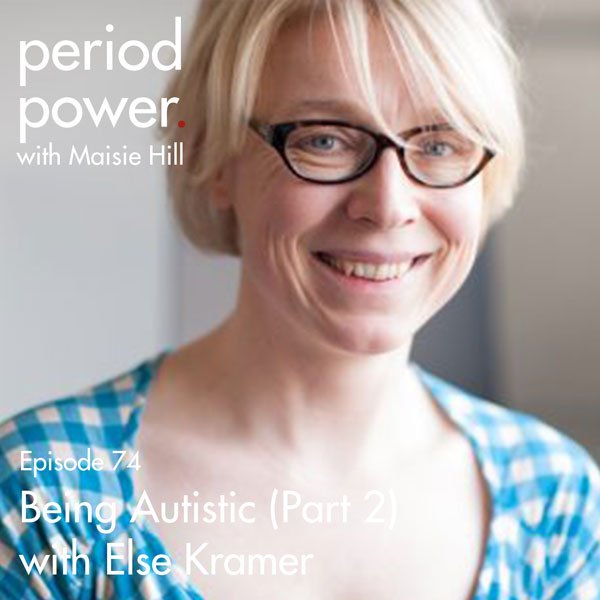
I’m back this week for part 2 of my conversation with my guest, friend and colleague Else Kramer. Last week we talked more generally about our experiences being autistic, and this week we’re answering the questions you submitted for us about these experiences.
Whether you want to know our favourite parts of being autistic, the reactions from friends and family regarding official diagnoses, or some signs we didn’t realise were related to autism, you need to listen in this week.
Join us for part 2 of our conversation as we share our experiences of coming out as autistic, how we navigate our relationships post-identification and some of the things that are challenging for us that aren’t for other people. Hear how we make sense of what’s going on in the world and our lives, what we wish we could teach society about autism, and our advice for what to do if you suspect you’re autistic or are at the beginning of your journey of being assessed.
The waitlist for The Flow Collective is open, so click the link to get yourself on it and be the first to hear when the doors reopen.
If this episode has resonated with you, I’d love it if you could subscribe, rate and review the podcast. Your review will help other people find the show and benefit from what I share.
What You’ll Learn from this Episode:
-
What glimmers are, how they vary, and how they help us.
-
How both of our autistic meltdowns manifest.
-
Some of the autistic traits that both Else and I relate to.
-
How I self-regulate in times of overstimulation.
-
What trichotillomania and dermatillomania are and how they can be common in autistic people.
-
What pathological demand avoidance is and how it might show up in your life.
-
How we navigate people telling us it isn’t possible to feel something we are physically feeling.
Listen to the Full Episode:
Featured on the Show:
-
Click HERE to access the brand new Period Power cards
-
Order my new book Perimenopause Power: Navigating your hormones on the journey to menopause now!
-
Order my first book Period Power: Harness Your Hormones and Get Your Cycle Working For You
-
Unmasking Autism by Devon Price
-
But You Don’t Look Autistic At All by Bianca Toeps
-
Dr Max – Autistic Assessment
-
Pathological Demand Avoidance (PDA)
Full Episode Transcript:
If you are in the horrors with menstrual cycle issues or you want to learn how to harness your hormones, then you are in the right place.
Welcome to the Period Power podcast. I’m your host Maisie Hill menstrual health expert, acupuncturist, certified life coach and author of Period Power. I’m on a mission to help you get your cycle working for you so that you can use it to get what you want out of life. Are you ready? Let’s go.
Okay, welcome back everyone. I know it’s been a week for you. It’s just been a wee and tea break for Else and I.
Else: So good.
Maisie: This is part two of a conversation between my guest friend, and colleague, Else Kramer, and I about our experiences of being autistic. So part one was last week where we were just chatting back and forth. And we were just saying how we’ve got so much more to say. And it felt like we didn’t even scratch the surface.
Else: 100%.
Maisie: But this is part two and in this one we’re going to be using the questions that you all submitted over on an Instagram post a little while back and just kind of letting those lead the conversation. So welcome back, Else.
Else: Thank you. It’s so fun.
Maisie: So, Amanda asked, what’s your favourite part about being autistic?
Else: Oh my God. So the upside of being so sensitive is that the world is so incredibly magical to me. And actually this brings me to what you explained to me during our certification, the concept of glimmers which I’d never heard of. But if I’m not sort of distracting myself, or completely immersed in something, or masking, then to me the world is an incredible place. And I can just be with a flower and it’s not quite ecstasy but it’s just, it’s really good, I’ve got to tell you. Just bliss, let’s just call it bliss.
Maisie: Bliss, yeah.
Else: Blissing out, there’s so much blissing out. There’s so much appreciation of small things which I think I used so much when I was teaching art and photography. I have such an appreciation of beauty where other people don’t even perceive beauty. It’s incredible. I love it. I would never trade that.
Maisie: Yeah. And I’ve had that too, just walking down a road and seeing leaves blowing a certain way or something like that, and point that out to someone and just interrupt the conversation. And be like, “Look at that”, and just really latch onto it and connect with it. And they’ve just been like, “What?” Because they’re just not able to or with not the same availability that we might have.
Else: Their focus just is on completely different things. I mean I remember going on a biking holiday with my husband in Italy. And I would want to stop every five metres because I saw a beautiful flower by the road. And he was just like, “Okay, this is nice, but there’s a 100 miles [crosstalk].”
Maisie: Maybe a walking holiday next time. Well, yeah, and just for everyone listening, we often talk about in terms of nervous system work, we think about triggers, things that kind of cause a stress response in us or kind of make us more prone to dysregulation. Whereas glimmers is the opposite, it’s the things that help us to feel safe, and connected, and social, connected with ourselves, connected with the world around us. And so glimmers really vary and they can be things that are right in front of you like a flower for example.
It could be thinking of a person or a place that is meaningful to you. So we can do it in our minds as well which I love. And it’s going to be so varied, the things that are glimmers for us but it’s often things that are to do with nature can be a real glimmer. And our brain just, I’ll do a whole episode about this, but basically our brains are just more prone to pick out the things that are a problem than pick out the things. So we have to kind of direct and steer our brain to the things that are glimmers and that are soothing for our nervous system.
So my answer to this question, what’s your favourite part? I would say my brain’s ability, is I can just do things very quickly. I can get to somewhere very quickly most of the time. Again this can be a bit of a place where there’s yes and there’s things that just require so much work and can be so slow. But I do like the way my brain, I just feel like it’s just fireworks always going off all the time. But it can also be annoying if I feel like the rest of me can’t keep up with my brain. You know what I mean?
Else: Totally. I think and that’s also a thing a lot of my clients have. They have the racing mind, or they do they that, come on, all ready, this kind of disconnect between where their brain is and the rest of them is and even the rest of the world.
Maisie: Yes, 100%. Okay, the next question comes from XX Paris. If you could teach society one thing about autism, what would it be?
Else: God. I mean I have a long wish list.
Maisie: I know, that’s the thing, how can we limit it to one?
Else: I think, I mean but that would apply to all neurodiversity, in all basically people being different just never assume and be curious instead of judging.
Maisie: Yeah, that was my one thing as well, I would say. Just don’t assume we’re all the same and that if, you know, I think I’ve seen that meme going round, if you’ve met one autistic person you’ve met one autistic person.
Else: Yeah. And also especially with smart women they are often perceived as being arrogant, imposing, intimidating etc, etc. Again, that may be their smart brain just wrestling off and saying really smart things. Whereas at the same time they’re completely freaking out inside for example, or just hoping you’ll say something kind.
Maisie: Okay. This one’s a really interesting one. I like this question. It comes from Inclusive Sex Talk. Do you relate to most or all of autistic traits? Have you ever felt like an imposter?
Else: I have never felt like an imposter.
Maisie: I have.
Else: But it doesn’t mean I relate to all autistic traits because there’s just too many.
Maisie: Yes. Why do you think you haven’t felt like an imposter?
Else: Because just everything clicked and fell into place. And I also have autistic meltdowns which are horrible and really, I think I have – whether it’s I have insane willpower, but I really want to hit myself and hurt myself. So a lot of people are used to seeing or were used to seeing when they were thinking of autistic boys, banging their head against a wall. If I had an extreme meltdown that is what it can almost look like. But my super smart brain, make sure I’m in a safe space before I have that kind of behaviour.
So I will only let it happen in front of my husband or when I’m alone and hopefully on a safe yoga mat or something. But I do have that shit and people are often astonished, they have no idea because all they see is this smart talking woman who seems to have it all together.
Maisie: Yeah, you look normal.
Else: Right, I look so normal. Yeah. No.
Maisie: Well, yeah, and I think this was another thing that I’ve loved from our relationship was hearing you talk about meltdowns because it wasn’t until I’d heard you talk about meltdowns that I realized that I do have meltdowns, but I only have internal ones. Or they are now but I for many years, two decades self-harmed very regularly, very privately. And it was a meltdown, it was a coping mechanism. And now I look back and for me, we touched on in the last episode, eating noises are really hard for me.
And when I think back to family dinners when maybe there wasn’t music on in the background, or maybe I was at a certain point in my cycle as well and it was just too much. And I was having a meltdown at the table but one that no one else could see. But then just feeling so much from it and then going upstairs self-harming, being in a depressive episode, regulating. Now I look back and I’m like, that’s what was going on. And so now I’m able to make sense of that experience and think, no, that was a meltdown.
But now I’m like, no, I do have meltdowns but they’re just ones that happen inside me. I think Paul would know. Paul knows now. I’m able to unmask enough and I think he’s just someone who’s very clued into these things and he would have a sense of it sometimes before I would.
Else: Yeah, which is amazing. And it’s the same with my family now. And that’s the other upside of knowing you can communicate your needs to your family. But now they will tell me, “Maybe you should go up to the attic for a while.” Listen, our attic is very nice. It’s not a bad thing.
Maisie: I’ve got this image of them just like…
Else: Like the woman in the attic. We actually have, it’s like an art studio with a beautiful view, so not a bad thing to have to go there. But just basically you should now go and be alone and not be triggered by any more sounds or stuff happening because then you’re going to implode or explode.
Maisie: Yes, okay. Yeah, I think for me the imposter bit has come with my cycle. Or there’s some autistic traits that I initially would have said, “No, that’s not me.” But then the more I’ve got to know myself as being autistic and the more I’ve learnt about autism now I’m like, “No, I do have that.” So food, I love food so much.
Else: Same.
Maisie: Right. So the idea of not always but some autistic people eat quite a restricted range of foods often because of sensory related things. And so I thought, no, I don’t relate to that at all. But now I’m like, oh, no, I definitely do. When I’m dysregulated, there are go to meals that feel safe for me to eat. And I would say I’ve also dismissed, I thought I was just a snob about quite a few things, like how my clothes fit, how food should be cooked.
Else: Right, that you’re precious.
Maisie: Yeah. I just thought, I’m just very particular about how clothes fit or I’m very particular about how pasta is cooked, or rice is cooked.
Else: Oh my God, yes.
Maisie: Or the things that it goes with. And I’m like, no, that’s just sensory. I’m just taking care of my sensory needs by making sure it’s an appropriate level of being cooked and not overcooked.
Else: And listen, I just want to emphasise how important this is because I went through life thinking I’m such a snob, I’m such a diva. I’m so difficult. I’m impossible which isn’t a great thing to be thinking all the time for your self-worth and the amount you like yourself. And a lot of people do this. They’re like, “Oh my God, I am just being impossible, I need to adapt.”
Maisie: Or being extra, being so extra.
Else: Yeah, I need to get better at this. And no, no, no, my friend. And again especially as women, we are so socialized to accommodate, to people please etc, etc. So that doesn’t help either.
Maisie: Yeah. So yeah, for me that’s where the imposter came in. And also just like I mentioned on the last episode, there’s times when I just felt really able to do ‘normal’ human things. So on those days I’d be like, “Maybe I’m not autistic.” But I would say that was kind of in the post for me, going through an assessment process whereas it’s not there now. I don’t usually have those thoughts now. A lot of people ask a kind of variation of this question of I suspect that I’m autistic, do you have any advice for what to do next, what to do from here? What are your thoughts on that?
Else: Well, there’s so many good books out there like You Don’t Look Autistic At All. There’s great websites with lots of information where you can sort of look at lists of autistic traits and sort of check, this is sharp for me etc, etc. And then think about if you’re like, yes, maybe. Then ask yourself, why am I interested in pursuing this? Why do I want to know? What will it change for me? Will I need a formal diagnosis, or do I just want to know for me?
And then so many Facebook groups, all the things that you can actually join to learn so much more about people who have a very different type of autism from you maybe which is also incredibly valuable. But also get that validation of, right, this is also what it can look like.
Maisie: Yes, I would agree with that. And I’m reading a great book at the moment called Unmasking Autism by Doctor Devon Price. And it’s fantastic. So I would really recommend getting their book as a great starting point. But yeah, the same as Else, I found the Facebook groups helpful. So many online communities there to learn from and be part of. And I would also say if you were going to be seeking out an assessment which you don’t have to do in order to identify and know that you are autistic.
But if you were going to, I think I’ve seen in some autism communities, people want that assessment so that they can have an official diagnosis. And then share that with the people in their lives in order for those people to accept that they are autistic. Because maybe this person does know they’re autistic but their – I don’t know – family members, colleagues, whoever are like, “Well, you can’t be autistic.” So there’s that very understandable urge, the desire to go and get a formal one so that then you can go, “Look, it’s on paper basically, I am autistic.”
And I would just caution with that because I don’t think people’s thoughts necessarily change just because you’ve got something on a piece of paper.
Else: No. And also it can be actually quite risky to disclose at work. So that’s very important to mention as well. Some people have disclosed at work and now deeply regret it because they’ve noticed they’re being passed up for promotions. They get bullied because still there is a common consensus with some people, what autism is. And it’s not helpful at all to them.
So some companies are doing amazing work in creating safe spaces, and having accommodations, and creating an environment where people are okay with speaking up and safe. And they can still have an amazing career but just check that first before.
Maisie: Yeah. I’m not sure how to say this person’s handle, Who-ay-who Music. I think we’ve kind of touched on this. They said, once diagnosed where have you found the most support and guidance for self-understanding? What resources would you recommend to newly diagnosed people and for those about to start their journey of being assessed? So we’ve touched on books, groups.
Else: So many Instagram accounts as well, yeah.
Maisie: Yeah. And TikTok ones as well. I haven’t really strayed too much into TikTok, but I see them being posted a lot. For me, coaching has been huge, working with my coach, Victoria. It’s been a great experience learning more about my nervous system, going through that professional training as well. What else for you, Else, anything else?
Else: I think for me, especially just being so curious even just without external help, but what does my brain need right now? What do I need right now? And completely curious and then let go of all the expectations, using that to kind of figure out, what do I really need? Because so many of us have been denying that for so long.
Maisie: Yeah, or limiting it, even if there’s an awareness of, well, I do need time alone but really I can only take five minutes rather than a day or two days, or whatever it is.
Else: And even recently with a client we were working together and I – so I had her kind of practice alone time. And she ended up sort of still having it with her kids but making them read books. Kind of sort of sneakily, I have to somehow combine it. I can’t just take, carve out time just for me, that’s selfish or whatever, yeah.
Maisie: Yeah. And I think that’s the thing is sometimes I hear from people, “Well, you’re able to do these things, Maisie, you’re in a partnership, you parent together etc, etc. What do you do if you’re a single parent or there’s just a setup that makes these things less possible or there’s kind of barriers in place in order to actually achieve them?” And that’s when I’m just like, “Oh man, just bring out the screens. It’s okay to hand your kid an iPad and take care of yourself.”
Else: Yeah, 100%. And also get help if you can afford it or just ask a friend. That is one of my biggest regrets I think. When my daughter was growing up, she’s older now so she doesn’t need me to take care of her. But I had a postpartum depression which also probably had to do with not knowing my own needs etc. But even after that it was so hard for me. My husband was travelling a lot. I was almost single parenting. And I was just like, “I need to get a break. I just can’t get a break.”
And what I would actually do, you’re going to laugh so hard at this, but she was still a toddler, so I was worried she’d hurt herself. So what I’d do, I’d lie down on the sofa, turn on the TV and put her on top of me and she’d watch the thing and I knew that. And I’d go to sleep, and I knew I’d wake up if she’d move. So it was safe for me to rest. I mean how insane is that?
Maisie: I think it’s smart.
Else: It’s very smart but it would have been better to just call someone and said, “Listen, can you just watch my daughter for a couple of hours or just one hour so I can nap?”
Maisie: But this is the thing, I think with just how society is set up these days, these things aren’t kind of maybe as immediately doable as they may have been with other ways of existing in a community together. But also when you’re in that place, it can be, whether it’s postpartum depression, whether it’s autism, burnout, whatever. Just what it requires to verbalise it and to ask.
Else: And even to have a person you can ask.
Maisie: Yeah, all of that. And I think that’s why, because I often think, like yesterday when I was regulating myself and I put on Paul’s dressing gown. And I was thinking, why don’t I just get one of these dressing gowns for myself? But then I remembered, no, there’s a reason that it’s good for me to steal his. And that’s because it’s a non-verbal cue to him that I need to regulate myself. So I don’t need to put energy into coaching myself to be able to say, “Hey, I need to go and regulate, I need time alone.” I just put it on. And I make sure he sees me in it.
And then I know I can kind of retreat and he’s able to talk to Nelson, kind of give me some kind of protection away from family life for a bit so it’s useful there.
Else: I love what you just said about, I could coach myself, just to all the self-coaching people out there, yes, you could. Well, actually some things you can’t even coach yourself on with a neurodivergent brain and that’s another whole podcast. But why would you? Your energy is limited like everyone else’s. So if you can change something in the world that doesn’t hurt other people, that makes it so much easier for you to live your life, for God’s sake, please do it.
Maisie: Yes. Definitely. That’s been a great one for me, just to be like, “I could coach myself on this and I’m not going to.” Because it’s not how I want to spend my coaching time. Okay, Roxanne asked, do you feel like people that previously accepted your ‘autistic’ traits as being part of you or your character but now that it’s been labelled as autistic are they less understanding or try to avoid contact?
Else: I think it’s the opposite as in that I am trying to avoid contact.
Maisie: That’s why it was funny because the second part of this question was, has an official diagnosis, so that would be for me, or yours, I would say yours is an official diagnosis, you just diagnosed yourself. Has a diagnosis harmed the openness of people towards you?
Else: It’s interesting and it’s very hard to answer for me. So maybe it’s better for you because I don’t have that many friends. And I also don’t see that as a problem.
Maisie: I have friends. I’m really proud of myself, I have got friends now and it’s happened quite naturally. But Paul still jokes about, because when we were on holiday we were talking about living in Margate and having friends there, being part of the community. And then he was just like, “Well, you still don’t have friends in Margate.” Which I love, we take the piss a lot out of each other in our relationship. It’s a big part of why our relationship is so successful.
So it’s not a problem for me when he makes a comment like that because there’s also so much truth to it in that the friendships that are most meaningful to me on the whole are ones that are online friendships and connections. But I would say and maybe I’m in a kind of more unique position than maybe other people who are autistic in that I think it’s made people more open to me. I love sharing about me. And I think that’s really useful and helpful most of the time to other people. So I think me being open about being autistic only increases the openness of people towards me.
Else: Right. And I think the people who can’t deal with it or can’t accept it kind of filter themselves out.
Maisie: Yeah. I’m sure there are people who doubt that I’m autistic or they just can’t, with the information they have, the knowledge they have about autism they can’t make sense of me being autistic. And I’m sure that those conversations happen with people I probably see walking around Margate most days. But I don’t spend any time thinking about it. I just accept that that’s probably there and I get on with my day. It would be such a waste of my brain to spend time thinking about that.
Else: Yes. But I have to say, there’s some people who are very dismissive. And when I kind of came out to them, “Are you sure? That’s not very likely, I wouldn’t think so”, etc. But those were relationships who weren’t that great in the first place. But I’m not seeing a lot of them anymore, just put it that way, to answer the question.
Maisie: Yeah, I had a couple of people but not people who I was particularly close to but just go, “Really? But are you sure? What about this?” And I’d just like, “Well.” Well, I don’t really call people much anyway, but I’ll call you even less than I did.
Else: Yeah. So in that way, yes, it has changed.
Maisie: Okay. Kaley Dunn said, do you feel people treat you differently when you tell them you’re autistic, have any of your family or friends had difficulties accepting your autism? I think it took my dad by surprise. But I don’t think he’s had trouble accepting it. He just accepts me and now this is just an additional piece of information about being autistic. So I think I’m probably still educating him about my experience of autism in safe social settings like Nelson’s birthday party recently. And I was saying, letting him know about some of the sensory stuff.
And he was like, “Oh yeah” because he just forgets. He’s just generally just so happy to see me and hang out and stuff.
Else: Oh, bless.
Maisie: Yeah, it not at the forefront of his mind. And I think other people just, yeah, have accepted it. I think it’s the people whose kind of on the periphery of my life who don’t know me that well who may be haven’t accepted it. But like I said, it doesn’t really matter that they haven’t.
Else: Exactly, it doesn’t really register.
Maisie: Yeah, okay. This one a lot of people wanted to know the answer to this. It’s either Mrs Da Fox or Mrs D A Fox, how have you navigated your relationship post identification? Has there been any tension between you as you begin to properly address your needs?
Else: I was hoping for this question because I was like, we have to talk about relationships at some stage, so good. Great question because to me and my partner, it’s been a gamechanger. I mean seriously, we have been together 27 years and a couple of days.
Maisie: Congratulations.
Else: For me pretty insane. And I think I’m very lucky in that I have, I think like you, an incredibly accepting partner who doesn’t feel threatened in any way if I need to go off and do stuff on my own. It has nothing to do with him and how I value him basically. He’s very solid in that. But it was very hard for me to communicate why some stuff was difficult for me. Or I would just get where I at the time didn’t realise was, have a meltdown and I would just unleash my fury upon him.
And then start saying all these things that were wrong with us, with him, really saying, “You don’t understand me”, which is true because we both didn’t know I was autistic so we both didn’t understand me in a way. And we had so many fights about stupid things where I’m now like, oh my God, now I know what I need to require from him to help me, how to communicate my needs. And also how I can explain like, “Listen, I know you love to do this thing, and it’s just something that doesn’t work for me”, for example.
And that’s one of the biggest things. Actually my daughter said to me, I think it’s a combination of coaching and figuring out I’m autistic. She said, “Mom, I am so happy you’re no longer angry all the time.” Because I used to lash out. There was so much frustration, and anger, and pressure because I was constantly trying to be something that I wasn’t. And that has gone now. It’s so good.
Maisie: Yeah. It makes such a difference. And yeah, I would agree, Paul’s a very accepting person. But it’s, like you said, no matter how well our partners know us we can’t expect them to understand the variety of things that impact us or to the degree that they do. That’s just, for me, yeah, it would be fucking amazing if they did but it’s an unreasonable expectation to go around thinking that they should. But it is my responsibility to let them know as best as I can about the things that are a struggle. And for me it’s the sound of Paul, generally he has stubble. And I love how he looks visually, very visually appealing.
Else: Super sexy.
Maisie: But if we kiss and kissing can be a bit of a struggle for me, sensory wise anyway. But getting pricked by a bit of stubble that’s just a bit too long, I just need to be upfront about it’s kind of at the length that’s a struggle for me. I’m going to get poked by it and it’s really a struggle, yeah. But it’s also when he’s stroking it and I can hear every single hair moving as he does it. And that’s the thing of it’s presumably enjoyable to him because he’s doing it. And it’s a very natural thing for us as people to kind of touch our skin, to touch our hair. I do that in my own way.
But it’s making space for both of our nervous systems in one environment. And I have often joked in a very serious way about how for me the dream setup would be to have two houses, not together at one part, so there’s a common area where we can both be but then kind of go off into our individual. I remember watching, what’s the film? Freda Kahlo and Diego Rivera. And they have two houses with a little bridge that unites the two houses. And I remember watching it thinking it may not be the best model of a relationship.
Else: But that’s the thing, I mean but why? And listen, that is the one thing that hasn’t changed, I never realised this was because of autism. But many times I’ve said to my husband, “I sometimes feel I want to become a nun and join a convent.” And I think it’s just because I’m not religious in that sense, but I just wanted to be alone.
And I have even suggested that we get different houses. But that to him is too much of if we’re married then his conception is still we need to live in the same house. But I think the bridge idea, we’ve already talked about buying a house with a little turret. So that’s the next step basically, yeah.
Maisie: But I think that’s the thing is once you have that awareness and you’re able and willing to risk having those conversations in your relationship and both people are able to have that conversation and those requests don’t mean anything about the other person or about your relationship. It’s actually in love of the relationship and of the other person that you’re risking it and letting them know.
Else: And they do want to support you. That’s the thing. He’s like, “Do tell me, please tell me how I can make life easier for you. I don’t want you to be triggered by sound all the time and getting super tense, and a headache, and dysregulated if I can avoid it.” And there is stuff that he – like the [inaudible]. I’m picking my battles.
Maisie: But the other thing that I wanted to say about this, and for me this was such a, you know, the person, I call him Doctor Max, I forget what his full name is, but we’ll put a link too in the show notes. He’s who I did my assessment with. The NHS waiting list was a long time to be assessed. And as you mentioned in the last episode, I didn’t want to take up space on it when I felt like other people were more in need of that assessment. So a lot of the kind of private assessments were just out of my price range, they were a no.
And then someone recommended Doctor Max and I did an online appointment with him. And he was just fantastic. And so many listeners of the podcast have had their assessments with him, and all have just had such a great experience. But it was really useful for me because some of the questions he asked me helped me to make sense of my autism. And we were just talking about relationships, and I can’t remember how he put it, but it was basically, “Are you fussed about being in a relationship? Is it important to you?”
And I was like, “No. I could do without it. It would be okay.” And I remember saying this to Paul, he was like, “Oh, well, that’s great.”
Else: Thanks, mate.
Maisie: Just joking around but I said to him, “But really that’s such a compliment to you and to our relationship that I could do without it and yet I choose all the time to be with you.” And I don’t mean I’m choosing all the time like I’m weighing up, should I stay or should I go. That’s not what I’m talking about. I’ve been in those relationships, that’s not what this is. It’s very much like I’m always choosing you. I’m always choosing us and this setup. Even when would it be easier for me on a sensory level to be off on my own somewhere? Yeah, it would. But I want to be with you, I want to.”
Else: And also listen, would it be easier for my husband to be with someone who is differently wired? Hell yeah. And he’s still choosing to be with me. And that’s the other thing that I used to and still sometimes like, what the hell, don’t you want someone who’s more normal, and easier, and hanging out?
Maisie: You can have a free flowing conversation with.
Else: Yes, doing stuff and doesn’t, you know, is like, “No, I want to go to this particular restaurant again because it’s fun, and predictable, and I know the food’s going to be good”, etc, etc. He’s like, “Can you just stop doing this? And sort of agree that I have agency and that obviously I’m choosing to be here with you. So can we just no longer have this discussion because it’s getting a bit annoying.” Yeah, he’s like, “Of course I want to be with you. If I didn’t want to be with you because of all these things, I wouldn’t be here.”
Maisie: But again that’s the thing, this is where the socialisation comes in of I’m a problem, I’m a hassle.
Else: Yes. It would be so much easier for him if, etc.
Maisie: Yeah, I’m asking too much. There’s only so much I can ask. Well, if I’ve asked Paul to stop whistling then I can’t also ask him to stop stroking his beard. And that’s the thing, it’s like really partnering with ourselves, creating safety for ourselves so that we can make these requests and make space for all of our nervous systems within it, yeah. That was such a great question. Okay, Kirsty asks, what feedback do you get from the world, other people’s projections, microaggressions, expectations that you have to deal with when you are open about your diagnosis?
Else: I already talked about that in the first episode, like outright aggression, you can’t be autistic. Microaggressions not so much I think. Maybe it’s just to people I know I feel sort of safe to either be rude or blunt.
Maisie: I don’t know if I’ve had any. But I think this is partly living a kind of sheltered life, I’m just not exposed to it. But again it’s also my particular setup with layers of privilege that I have where I have my own company. I’m not going into a workplace. I’m not existing in structures and systems that tend to be oppressive in nature. I’m sure there’s lots of people who do deal with a lot of these things.
Else: I’m actually thinking of one example which I now know has to do probably with my autism. But I have extreme tension in my muscles. I used to go see physios and they would be like, “What the hell, how are you still walking, woman? It’s just your calves are rocks and so are your shoulders.” And, well, first of all then I felt really bad about myself, there’s something obviously very wrong with me. And now I know it’s probably all the masking I’m trying to do all the time, that it just tenses up my body and it’s much better.
But I remember going to a yoga class and the instructor just seeing me as this kind of weird alien and communicating also that to the rest of the class, “How is it possible that you can’t even do this? How can your muscles be so tight?” And that just felt so bad, I never went back also. Basically just affirming obviously you’re some kind of freak and there’s something very wrong with you. And this is not a space for you.
Maisie: Yeah. And I think that’s the kind of thing, probably if I looked back on previous experiences but I just think now in my life, that’s a question that isn’t so applicable. But for so many people that will be a question where there are a lot of answers and there are multiple ways where that shows up. I think that’s just that it’s less relevant to us with how our lives are and the privileges that we have, yeah. Okay, this one’s a big one. Lindsay asked, how have you grieved for or reconciled your childhood?
Else: Okay, a big breath first. It’s ongoing. It’s ongoing because I think you’ve gone for such a long time just coping, and carrying on, and trying to make life work, working so hard that usually either there will be depressions as there were for me. But there wasn’t this open grieving and processing the sadness of growing up and thinking, in my case, there’s something very wrong with me. And my emotions are invalid etc, etc, and how painful that was.
And that has only sort of started, I think not just with discovering that I’m autistic but also just with the whole coaching journey. Learning how to process emotions safely because before I thought I would just die. If I opened that pandora’s box I would just, well, maybe not die but just be admitted to a mental institution straightaway. So I think that’s something you take in small doses, and you’ll be triggered, there’ll be a memory.
Or if you have kids, for me, having a daughter is very triggering because I kept projecting my past into her future which was so scary. And I so wanted to protect her. And my partner was very, very helpful in that he said, “Listen, she doesn’t have your parents”, which made a massive difference in my thinking. But also grieving my own past allowed me to sort of let go of that whole horror scenario for her, yeah, but it still happens. I’ll think of something, or something will be triggered, and I’ll be like, “Oh, that, yeah.” And that will bring up another piece of grief that I then process.
Maisie: It’s an interesting one for me because I don’t know how much I do this, and I think it’s because I had already done it but without the lens of autism for understanding. So having depression for long periods in my teens and in my 20s, self-harming, all of that was related, I’m sure to my cycle, before I started tracking my cycle in my teens that it was all coming in. But I had already gone to therapy, done various things, kind of self-reflection. And already grieved for the things that I didn’t get that I wanted or needed.
And I’m very much of the belief that my parents 100% did the best with what they could. And they just weren’t particularly great with their own stress responses and processing of emotion. And so I reconcile my childhood through that thought, that belief which I do think is true, it’s my truth at least and I’m pretty sure it would be their truth as well. So I think there’s less that I need to do of that now just because there’s been previous incarnations of me grieving and reconciling my childhood already.
But I definitely needed to grieve that I was starting to suspect that I was autistic when my mum was terminally ill. And so I didn’t start the formal assessment until she had already died. And so I have grieved not having those conversations with her. I do think it was probably a kindness not to have those conversations with her. I don’t think kind of when you’re close to dying, I don’t know. I think my mum was probably someone who would be up for having it. But I think she probably would have taken it quite personally that it was something that she didn’t know.
She didn’t realise, she would have probably as tendency is in our family, I’d say probably in a lot of families to go to shame of I didn’t do something. I should have known. I should have done something better. My parenting blah, blah, blah. So I think that’s where I’m at with it. And I think as you’ve said, coaching has just been so beneficial, therapy in the past has been so beneficial. So there’s just a lot that I have already processed and grieved. But time to time something comes up but it’s mainly, I think I mainly just feel relief rather than grief. It’s like, oh, that’s what that was.
Else: Yeah. Obviously when people talk about why do you even want this label? It’s the relief that comes with the understanding.
Maisie: Yeah. I can’t remember how this question was phrased because I’ve just made notes for someone. Hello Little Hippy, was asking about the occurrence of trichotillomania, which is hair pulling and dermatillomania which is skin picking.
Else: Yeah, which I sometimes do.
Maisie: I am a skin picker through and through. We’re high fiving each other through the screen because this is a big one in some people who are autistic. And it is there for me, not the hair pulling but the skin picking. I went for a facial the other day and I was explaining it to the woman who gave me a facial. I am a picker and it’s both the soothing of it, the soothing nature of it, the regulation from it and it’s also a stim, feeling my skin and feeling for where there’s a little something or something that can be picked at.
And then the actual experience of popping a spot for example, what it feels like and what it looks like. And I can even do it in my mind. I can think back to things and I’m like, oh yeah. I won’t go into too many details for everyone.
Else: No. For me it’s my thumbs, somehow the skin on my thumbs is just like, yeah, it’s got to be picked at. And also by the way it’s incredible how quickly your skin heals. It’s the miracle of life.
Maisie: But I’ve made a lot of sense of this in terms of when you think about our evolutionary history as mammals. And when you look at lots of other mammals they groom each other, and they pick. So I do think it’s just something that is an innate behaviour that is something we do to connect.
Else: My God, you’re blowing my mind right now because I used to live in a zoo. I’m just thinking of all the animals that were constantly grooming each other, yeah.
Maisie: Yeah. So it’s just that behaviour, its connection, it’s soothing, it helps to complete stress responses. So I was really able to make sense of it in my mind as there’s, yeah, I do this, it has this effect on me. But I also felt so much shame for it. I shouldn’t do it. And Shannon coached me during master coach training on this and it was so good. And since then I just haven’t felt any shame about it. I’m just like, I’m just going to do it, I’m going to enjoy it and then I’m going to go back to my day.
Because then what you have is, otherwise you have the shame and then nervous system dysregulation which then increases the need to do a behaviour like that and it causes an issue.
Else: It all goes downhill from there.
Maisie: So I can’t remember what Hello Little Hippy’s question was, but yes, we do it and it’s a thing. Okay, Arial Marie said, are either of you demand avoidant? So for anyone who doesn’t know, there’s a label called pathological demand avoidance, a great name. I feel if I was going to have a radio show or a band that’s what I’d call it.
Else: A great name for a band.
Maisie: The t-shirts would be so good. So PDA, and we’ll put a link to this in the show notes is the avoidance of everyday demands, and they can be direct demands like requests that others put on you, like, “Put on your shoes.” Not that someone demands that of me but it’s what I say to Nelson. Or, implied demands, things that are just, like going to the post office like we were talking about earlier, or making phone calls, whatever. But some people think it’s a subtype of autism. But that it can also exist on its own. And it is something all humans experience to some degree.
But I think for me in my reading about it is that when it’s demand avoidance it’s when you will avoid even the things that you want to do.
Else: Interesting, okay.
Maisie: And it can also be avoidance of bodily processes like so knowing that you need to go to the toilet and that’s a demand so then you avoid it.
Else: I do that because I’m learning to, I’m much better with it now but I used to think, peeing again, so boring. Because I would be hyper focusing and I don’t want to stop focusing on the thing I’m involved with and that is not healthy.
Maisie: No. And this is the other thing, so I’m glad we’ve touched on weeing, I had no idea we were going to go there today. But I need to wee a lot and it’s not about hydration and it’s not about bladder dysfunction because my bladder is in tip top shape. I used to work alongside a really great pelvic health physio. And she specialised in bladder retraining and things. And she would use me as a demo model for using ultrasound. So put the ultrasound probe inside internally of the vagina. And then as you do pelvic floor exercises you see it on a screen, and it can help people.
I hope I’m remembering this right, but it can help people to make the visual connection with what it feels like internally as they do certain pelvic floor exercises for example. And she was just always like, “Your pelvic floor is amazing.” And people will be like, what have you done? I’m like, “I don’t know. I don’t what I’ve done.” But I have been blessed with this amazing pelvic floor. So it’s nothing to do with that. But I think it’s because I’m able to detect what’s going on in my body so well, I think what’s going on.
And I should actually talk to a pelvic health physiotherapist about this, but I think what’s going on, I think my bladder is filling up and I can feel it. So it’s not that my bladder’s full and it needs to come out, it’s just that I’m so aware. When I was pregnant, I thought I possibly had an ectopic pregnancy because at nine weeks I could feel something off to the side of my abdomen. When I had an ultrasound, no, everything’s good, this is a healthy progressing pregnancy. But the sensation never went away, it just kind of changed.
And I thought, oh my God, I could feel him moving at nine and a half weeks which people tell you that’s not possible in pregnancy.
Else: Yeah. Your physical experience is not possible.
Maisie: Yeah. So I think I just was so aware but then it’s wanting to override that. Probably pelvic healthy physios are like, “This is interesting.” And be like, “You need an appointment.” But this is how I’m making sense of what’s going on. But I think Paul would tell you that I am demand avoidant. And I think there’s truth in that. But this is again, it’s the things that are maybe challenging for us that aren’t for other people, so we avoid them. And it’s not necessarily because of a demand.
Else: Yeah, like admin, or I don’t know. I mean I can think of all sorts of stuff I’m avoiding. But I just think that’s because I suck at it, and I hate it.
Maisie: Which is a good reason not to do something. Yeah. So I think there are some of these things but then it’s also again, it can be the audio processing that is just slow so I’m just not hearing it. Or my brain just registers as this isn’t important. I’m useless with verbal instructions of any kind. I just cannot take them in whatsoever. But yeah, there are plenty of things that I will avoid doing or I’ll save them up for the point in my cycle where I can do them, like making phone calls, do them in the run up to ovulation.
So yeah, I don’t know, it’s a nuanced conversation but I do think that it’s there in some ways. Okay, Dionne asked, how did you come out to share your diagnosis? I just announced it on Instagram as soon as I found out, I just shared it, that was it. I was just desperate to.
Else: Interesting. I just told some people and I started posting about being autistic but I never kind of announced it as a thing. So I never officially came out. I just started celebrating Autism Day and started posting about how happy I was to finally figure out lots of things about myself.
Maisie: Yeah. I was going to say, this is possibly an area where demand avoidance comes in for me because when I originally reached out to you, I was like, “We need to have this conversation. It’s going to be so great.” I was thinking, let’s do it as part of Autism Awareness Month which is April. Here we are recording on the 3rd of May. Because I really rebel against certain days, and weeks, and months. And so it’s no surprise to me that yes, I had the intention of let’s do this for Autism Awareness Month but we’re only recording it once it’s finished.
And I do think that’s because in my head it’s like I’m avoiding the supposed demand of there’s a month.
Else: Right. When you have to do this, yeah. I had the same thing about posting, there were so many posts about this is what autism looks like. And I thought the entire month, shall I join in? And then like am I doing it because I want to or because I feel kind of pressured to do it because it’s what we’re now supposed to do to show the world what autism can look like etc, etc. And like, okay, I’m not doing it right now. I’ll just do it whenever it feels right.
Maisie: Yeah. Okay, final question from I Am Kristen. What were some signs that you didn’t realise were related to autism?
Else: So many. Well, the need to know what’s going to happen. So I don’t think we have even talked about this but being so bad at when the plan changes, or you miss a connection, or something completely unexpected happens. I mean there’s so many things, a whole, whole list.
Maisie: Well, I was telling you earlier today about how yesterday when we were due to go out, there were going to be all these other families at 12 o’clock midday and it’s a 40-minute drive away to get to this place. And at one o’clock we still hadn’t left. And I was sending my friend, Mars, all these GIFs of cartoon characters and people banging their heads on walls. Because it’s a real struggle for me. And Paul, he’s more relaxed with time.
Else: We have the same partner. This is so interesting.
Maisie: Whereas I can be time blind. Well, it’s weird, I have a strong sense of time of day. I’m very good at guessing what the time is. And I think that comes from working as a therapist for so long and doing appointments starting on the hour. I’ve got a very good sense of what an hour feels like. But I’m kind of time blind in that I can’t think about things until it’s happening on the day. But if we’re late that is a huge – I hesitate to use the word ‘trigger’, but it is triggering for me being late.
And even when it’s something that’s a relaxed social thing, it’s not like there’s an appointment starting at midday. It’s just for me I’m like, but it’s 12.
Else: In your head, it’s just carved in stone, even though it’s just an agreement you made, your brain is like, no, but it’s 12. We’ve got to go. It’s interesting.
Maisie: But I think the other thing for me is I have a process for everything. And Paul is just amazed at my processes because now we know that’s what it is whereas before I just thought, I was just annoyed that people didn’t do things the way that I thought they should be done. Whereas now I’m like, so I have this very detailed process. And a good example of that is washing up, doing the dishes.
Else: Oh my God.
Maisie: Else’s cracking up over there.
Else: Okay, one really short example. I almost divorced my husband because he used the wrong cutting board for something. I think he used a wooden cutting board to do something with meat and eggs and I just wanted to kill him basically. Because to my brain that was impossible because I have rules.
Maisie: But it’s so funny because I think my clients will be laughing and going, “What?” Because I’ve coached them in The Flow Collective on these kinds of things.
Else: We’re still human, and the master coaches are still human.
Maisie: Yeah. but I’m able to do that because I’ve coached, I’ve gone through it myself as well. And I would say for me, doing the dishes, it’s like there’s doing the glasses and things first. The things that are cleanest. But then it’s not just that, it’s how they go in the drying rack. And so it’s organised by shape, but it’s also organised by the noise that it will make when it gets taken off. And that’s not necessarily about how shapes stack, it’s also what’s the thing that’s going to be needed to picked up first.
So it’s like my brain is comprehending multiple things all at once and has come up with this one solution.
Else: This super optimised system.
Maisie: Yeah, it’s super optimised, even at the checkout, putting food in is like Tetris, what is appealing. But it’s also what’s heaviest, what’s going in the freezer, what’s going in the cupboard, its all of these things.
Else: Are you in my brain? Oh my God. Okay, but listen, this is one, I have to say something about this because I think all the smart people I work with, so much of their capacity is going into this stuff which isn’t necessarily always a bad thing. But if we can reduce some of that so they can actually use it for even more fun things to do in the world, how amazing is that?
Maisie: Yes, definitely. And I think that’s the thing of just being honest with yourself and the people who are around you about these things so that our brains aren’t taken up with it. The other thing, I’m very particular about the last bite of food, it needs to be the right ratio of flavours, textures, a combination of things that are on the plate. I’m very particular about that. So when someone else like my child swoops in and wants to eat something that’s a no.
Else: Equation is messed up.
Maisie: I put so much thought into this and now you’re coming in and wrecking it by taking that bit of chicken, or I don’t know.
Else: Just take the plate.
Maisie: But I think this is where reading the lists and the things that are available online because there are so many things that relate to the experience of being autistic that you just don’t realise are. And that’s a continual process of discovery.
Else: Yes. And also, I think in the beginning you can go a bit mad, you’re like, “Oh my God, this is also autistic. I see that a lot in the Facebook groups. So people will be like, “Is this an autistic thing?” I’m like, “Well, I’m not so sure. I think there’s an overlap when you think about the Venn diagrams. I think a lot of autistic people do this or have this habit.” So I think it’s a bit like the rollercoaster behind me. So first of all we’re like, “Everything is an autistic trait.” Then you’re like, “Okay, maybe not so much.”
And you kind of cycle back and forth until you figure out what is for you, what is in general etc, etc. It’s a new lens through which you look at the world.
Maisie: Yeah, it is. This has been so much fun. We might need to do more of these.
Else: Right, my God. There’s still so much to talk about, anyhow.
Maisie: Well, but you have a whole podcast.
Else: I do.
Maisie: Tell everyone about that so that they can go and find you.
Else: Okay, so I have a Managing the Smart Mind podcast for people with smart minds who sometimes use that mind for things that are necessarily useful. So my clients are all on the outside very successful, smart human beings, sometimes autistic, ADHD, all the things. But they haven’t learned how to use that power they have for the right things. So a lot of it still goes into trying to look, be normal for example, or to chastise themselves when they have needs which they, or society doesn’t perceive as useful.
And I talk on the podcast about basically everything you can do to manage your mind in a better more fun way so you can have more fun with your life.
Maisie: So Managing a Smart Mind is your podcast. And your website?
Else: coachkramer.org. I’m now thinking is this an autistic thing. See, I’m doing it too. I love alliteration. So Coach Kramer, I mean come on. It sounds so good.
Maisie: No, I know, I mean there’s so much alliteration in my books and things like that, yeah.
Else: Interesting.
Maisie: Anything else? You work with, you coach people, you have your podcast?
Else: One-on-one, basically if you’re like, I am, yes, oh my God, I know I have this incredible brain, but I am exhausted all the time and people think I have this amazing life. But I just feel miserable. This is how I felt. I felt, yes, I’m doing amazing stuff, but I feel like I’m wading through treacle, and I should be feeling good. Where is all my energy going? Or I don’t know exactly what I should be doing. I know I can do so many things, is it me, I can’t make up my mind, I don’t feel fulfilled?
Should I stay in my job? Should I stay in my business? Or should I start my own business, build it out? All that stuff, that’s what I do with my clients. And a lot of it is just normalising what they actually want. Because they do know in general. But they’ve had so many messages from so many people, from society that they want isn’t legit. And then once they open up to the possibility that not only can they totally want that but also totally have it, then we can have so much fun.
Maisie: Amazing. I have loved all of our coaching experiences together because we got to coach each other in life coach training and things, so good. And so I highly recommend hiring Else and checking out Else’s work, listening to the podcast. This has been so much fun. Thank you so much. And I can’t wait to hear what everyone thinks of it. So I hope you’ve enjoyed these two episodes and we’ll see you next week. Bye everyone.
Thanks for listening to this week’s episode of the Period Power podcast. If you enjoyed learning how to make your cycle work for you, head over to maisiehill.com for more.
Enjoy the Show?
Don’t miss an episode, follow the podcast on Spotify, Apple Podcasts, or Stitcher.
